Tampilkan postingan dengan label TRAVEL. Tampilkan semua postingan

Kamis, 28 Januari 2016

NEW YORK TO LONDON IN 11 MINUTES? YES, IT'S POSSIBLE.


Imagine, if you will, getting seated comfortably in an airliner seat in New York, and a mere 11 minutes after reaching altitude, you're coming in for a landing in London. Yes, it sounds like science-fiction, but it may soon be possible.

Innovation in aerodynamic design is constantly making great strides, from automobiles, bicycles, and wind turbines, to rockets and space vehicles. Charles Bombardier, a Canadian industrial designer who gave us the concept of the Skreemr, a supersonic plane capable of traveling at Mach 10, has come through with a more incredible idea. But instead of going a mere Mach 10 and taking 30 minutes between New York and London, as the Skreemr was supposed to travel, Bombardier has come up with a totally new concept in aerodynamic design in collaboration with Lunatic Koncepts founder Abhishek Roy. 
 
Called the Skreemr  the aircraft incorporates scramjet technology  allowing for engine combustion to...
Called the Skreemr, the aircraft incorporates scramjet technology, allowing for engine combustion to be achieved via air coming in at high speeds. Getting the plane to travel at that great rate of movement is aided by a launch involving a magnetic railgun system.
Geobeats News
Bombardier's next-concept jet, the Antipode is a design engineer's dream. Picture this: a 10-passenger private jet that takes off using rocket boosters that detach at an altitude of 12 km, and then fires its supersonic engines to hit speeds of Mach 20 (20,000 km/h), getting you from New York to London in 11 minutes. This new concept jet comes just a few months after the Skreemr, a four-wing scramjet capable of carrying 75 passengers at about Mach 10 was introduced. That is about five-times the speed of a Concorde, by the way. But the scramjet design is something even NASA is still working to develop, and the Skreemr has remained a concept that is still on the drawing board. So how will the Antipode work? "I wanted to create an aircraft concept capable of reaching its antipode -- or the diametrical opposite -- as fast as possible," Bombardier told Forbes. Did that statement lose anyone?
Charles Bombardier  Canadian industrial designer and entrepreneur
Charles Bombardier, Canadian industrial designer and entrepreneur
Paul Alexander
The Antipode's wings would be fitted with rocket boosters that would get the plane up to 40,000 feet and Mach 5, and like the Skreemr, it would be powered by a scramjet engine. A scramjet engine, or supersonic combustion ramjet uses oxygen from the atmosphere passing through the vehicle, instead of using liquid oxygen tanks on board. The basic idea behind a scramjet is that the aircraft can be lighter, smaller and faster without the tanks of liquid oxygen. Feasibility issues to overcome With the Skreemr concept, the design met with two big problems. One was heat, and the other was sonic booms. Objects traveling at Mach 5 can reach temperatures of 980 C (1800 F), and there really aren't that many materials yet that can withstand that type of heat. And there are many of us that remember the sonic booms from jets years ago flying over residential areas. Going at the speed, the Skreemr and Antipode would be capable of going almost guarantees sonic booms. But Bombardier believes he has found a solution to both the heat and sonic booms. Joseph Hazeltine, an engineer at Wyle, which provides technical support to both NASA and the U.S. Department of Defence contacted Bombardier after the Skreemr concept was published online. Hazeltine had come up with an interesting solution. 
 
Conceptualized image of Antipode.
Tomo News
The long penetration mode or LPM LPM is an aerodynamic technique that uses a nozzle on an aircraft's nose to suck in air and cool the aircraft's surface down. The technique will also muffle some of the noise when the aircraft breaks the sound barrier. All in all, the concept is very impressive, even though it may be decades away from becoming reality. But it is a lot of fun to think about, isn't it? Charles Bombardier is a Canadian industrial designer and inventor. He began publishing his concept designs online in 2013 and has created designs for cars, motorcycles, planes, and boats. Interestingly, he does not patent his work, relying instead on feedback and input from others in ways to improve his designs.

Senin, 25 Januari 2016

10 FOODS THAT ARE MORE EXPENSIVE IN SINGAPORE.


Milo›
Image 1 of 10 | Image credits: Celine Asril
MILO, 1.25KG TIN | This Australia-manufactured cocoa-flavoured powdered drink is a fixture in many of our lives. It retails at a whopping S$23.70 at Fairprice, but at a mere fraction of AUD12 (S$13.67) in Australia’s Coles supermarket.


Glass of house wine‹›
Image 2 of 10 | Image credits: Wikimedia Commons
A GLASS OF HOUSE WINE | We know the Economist Intelligence Unit (EIU) report compares the prices of a bottle of table wine, but that is not quite level ground for Singapore’s wining crowd (prices of wine bottle fluctuate, even before the alcohol tax came into effect). Instead we’re comparing prices of a glass of wine, and it comes to around S$12. Over in Zurich, Switzerland, a glass is CHF6.50 (S$9.34).


 10 eggs organic
CHEW’S ORGANIC SELENIUM EGGS, 10 | The main stars of our eggs Benedicts can be had at S$3.95 for ten, though they’re considerably cheaper in Malaysia at RM5.39 (S$2.09).


Gardenia white bread ‹ ›
Image 4 of 10 | Image credits: Isetan Singapore
A LOAF OF GARDENIA BREAD | A loaf of the long-standing brand’s sliced bread retails in Singapore for S$2, but if you cross the border to Malaysia, the all-white (not 'enriched', sorry) slices can be had for as little as RM2, which comes to around S$0.77.


LAduree macarons ‹ ›
Image 5 of 10 | Image credits: Celine Asril
LADUREE MACARONS | While in Paris, France, the individual macarons can be had for €1,70 (S$2.97), these babies go for S$3.50 a pop at the Takashimaya branch.


Sack of rice ‹ ›
Image 6 of 10 | Image credits: Tesco Malaysia
FRAGRANT RICE, 10KG |  A sack of popular brand Fragrant’s rice is S$29.15 at Giant. Hop over to Tesco in Malaysia and you’ll save a few dollars (RM63.99; S$24.81).


fresh milk ‹ ›
Image 7 of 10 | Image credits: Tesco Malaysia
F&N MAGNOLIA FRESH MILK, 1 LITRE | Our neighbours can get their calcium cheaper at RM$5.49 (S$2.13), while we get ours at S$3.50.


Krispy Kreme ‹ ›
Image 8 of 10 | Image credits: Celine Asril
KRISPY KREME DOUGHNUTS, ORIGINAL GLAZED, 12 | We all know the dozen original glazed Krispy Kremes retail for S$23.40. But did we know that it goes for a mere RM19.90 (S$7.70) in Malaysia?


Subway meatball marinara ‹ ›
Image 9 of 10 | Image credits: Subway
SUBWAY MEATBALL MARINARA, FOOT-LONG | This 12-inch sandwich stuffed with Italian-style beef meatballs and tangy marinara sauce is S$10.10 in Singapore. In the United States, it’s US$5 (S$6.35).


HOUSTON-ISTANBUL TURKISH AIRLINES FLIGHT DIVERTED FOLLOWING BOMB SCARE.

A Turkish Airlines flight from Houston to Istanbul was diverted to Ireland Sunday morning after a bomb scare, police and the airline said.
IMAGE: Turkish Airlines flight 34 sits at Ireland's Shannon airport after a security scare.
Turkish Airlines flight 34 sits at Ireland's Shannon airport after a security scare. Erez Lieberman Aiden / Twitter
Flight 34 was diverted to Ireland's Shannon airport after a napkin was found in the toilet with the word "bomb" written on it, the airline said in a statement.
The plane, carrying 209 passengers, was met by emergency services upon landing at 11:02 a.m. local time (6:02 a.m. ET).
U.S. passenger Erez Lieberman Aiden said fliers spent an hour on the plane after the flight landed.
Aiden said he was woken during the middle of the flight and asked to check his luggage for any suspicious objects, but was not told why. After checking passengers' luggage, flight attendants then ripped the covers off the seats, "as if they were looking for something," he said.
The BBC reported the plane would remain parked until its scheduled flight time elapsed, when authorities would search the aircraft and speak to the crew

Sabtu, 23 Januari 2016

'LIKE STEPPING INTO A NOVEL' 

 St Petersburg in winter: 'Like stepping into a novel'

St Petersburg, the setting for key scenes in the BBC's dramatisation of 'War and Peace', is at its best under a blanket of snow


St Petersburg in winter: 'Like stepping into a Russian novel'
St Isaac's Cathedral Photo: AP/FOTOLIA
On the edge of a frozen lake, somewhere outside St Petersburg, I am stretched out on the wooden racks of a rickety banya, or sauna. Clouds of steam part to reveal several lobster-pink Russians on the racks below. Some maniac has just thrown a bucket of water on to the hot stones in the corner, and the temperature – already somewhere between gas mark 8 and Dante’s Inferno – rises dramatically. I feel my bone marrow is melting. Meanwhile, my new best friend, Seva, is whipping me with birch twigs – “For improving circulation,” he grunts.
Russian banya are the Baltic equivalent of ginseng; they cure everything: liver complaints, skin conditions, muscle ache, sexual dysfunction, broken hearts, spiritual unease. They are an integral part of the Russian winter, for the thing about the banya is you need a freezing lake to get the full benefit. The door opened momentarily. Snow wafted in as two enormous men set off at a canter, clutching tiny bath towels, down an icy path to where a hole had been cut in the ice of the lake.

 In our islands, most of us don’t get a great deal of winter. We get rough weather, especially this year, but not proper winters – frozen lakes, white sculptural landscapes, startling blue skies, snowdrifts groping the windowsills, a dry, sharp cold that crackles and snaps and presses your nostrils. In real winters, your breath plumes into the air like a steaming kettle, and the blood starts to pump. A proper winter is not just ravishingly beautiful, it is exhilarating. Winter is St Petersburg’s natural season. Perched on the edge of the Gulf of Finland barely 500 miles from the Arctic Circle, the one-time Russian capital is at its most beautiful when the snow starts to swirl. The Neva River is a wilderness of ice, and in the squares of black, bare trees the winter light is pale and watery. Along the frozen canals and the wide avenues there is a muffled stillness.
 
St Petersburg in winter: 'Like stepping into a Russian novel' 
Ice on the Neva River  Photo: AP/FOTOLIA

St Petersburg is the city where everyone looks fabulous in furs and rosy cheeks. As the afternoons draw in, the fat globes of the street lamps blossom along the Nevsky Prospect, and the frosted windows of the shops glow invitingly. In Theatre Square ballet fans hurry towards the brightly lit Mariinsky Theatre, where Nijinksy and Nureyev both performed; its season begins in autumn and runs through the winter. Across the city, frost patterns decorate the windows of the Winter Palace. Not far away, the great dome of St Isaac’s hovers like a vision in the early dark, while the statue of Peter the Great rearing on his horse above the bare trees carries a mantle of snow around his shoulders.


"St Petersburg is the city where everyone looks fabulous in furs and rosy cheeks"
St Petersburg is not an old city, or an Asian one, like Moscow. It was built to be Russia’s window on the West. In the spring of 1703, Peter the Great, flush from victory over the Swedes, got down from his horse in the marshes that bordered the Neva River and cut two slices of turf with his bayonet. Laying them in the form of a cross, he announced, here there shall be a city.


So began the 18th century’s most extraordinary building project. A quarter of a million serfs, soldiers and prisoners of war were press-ganged into Peter’s grand new project. Millions of logs were floated down the Neva, and stone work was forbidden elsewhere in Russia so that the nation’s supplies could be diverted here.
St Petersburg in winter: 'Like stepping into a Russian novel' 
The Peter and Paul Fortress, where the Romanovs kept political prisoners in medieval conditions  Photo: AP/FOTOLIA

The nobility was commandeered, too. A thousand of Russia’s best families were ordered to construct houses and palaces in the new city. In muddy fields and clapboard towns across the sprawling distances of Siberia, peasants listened to tales of how Peter was creating his city in the heavens then lowering it down to earth. Within 50 years, St Petersburg was one of the most sophisticated and opulent cities in Europe. Palaces and academies, cathedrals and theatres, ministries and state institutions lined the avenues and canals as they radiated from the golden spire of the Admiralty. Peter’s new capital, his window to the West, had turned its back on its creaky empire and on “Asiatic” Moscow.


Seva was born in St Petersburg and would never live anywhere else. I met him through mutual friends and he guided me around the city he loves. “Peter,” he said – he had the curious habit of calling the city by this single name – “we are always falling in love with Peter. It is a city of romance.” An artist, a bohemian, a romantic, Seva could have been the archetypal St Petersburg citizen.


Real and imagined, romantics have always loomed large in Peter’s life. For instance, it was in St Petersburg that Anna Karenina fell in love with Count Vronsky . Tchaikovsky studied at the St Petersburg Conservatory and conducted the premiere of his Sixth Symphony in the city only nine days before his death; he is buried in the Tikhvin Cemetery alongside other St Petersburg romantics – Borodin, Mussorgsky, Rimsky-Korsakov and Dostoevsky. But it was Pushkin, the great Russian poet, who set the bar for gallant St Petersburg romantics, conducting numerous love affairs and fighting no less than 28 duels. He succumbed in the 29th, fatally injured by a man he accused of trying to seduce his wife. His seconds carried his body to his home on the Moika River Embankment. It was midwinter.

St Petersburg in winter: 'Like stepping into a Russian novel'F
Fog envelopes one of St Petersburg's parks  Photo: AP/FOTOLIA

Russian winters have made St Petersburg a world of interiors and, with 500 palaces in the city, many are magnificent. Step inside the double doors, shed the overcoat and fur hat, and you enter a world of sweeping staircases and gilded moulding, of forests of chandeliers and ballrooms measured in acres, of battalions of nude statues and regiments of headscarfed babushkas with mops trying to keep up with the cleaning.


In the Yusupov Palace, you can follow the assassination of Rasputin by the cross-dressing Prince Felix or attend a concert in the tiny rococo theatre.
The best of the palaces are a carriage’s drive from the city – Peterhof, Tsarskoye, Pavlovsk, the Catherine Palace. To see them in winter when snow drifts across the parklands is to step into the pages of a Russian novel – as we shall witness when the BBC’s spectacular adaptation of War and Peace airs tomorrow night (some scenes were shot on location at Catherine Palace itself).


But the mother of St Petersburg’s palaces is the Winter Palace, a building that would make Buckingham Palace seem cramped. There are said to be 1,500 rooms and 117 staircases. Its excess reflected that of its creator, the Empress Elizabeth, daughter of Peter the Great, who ruled Russia for 20 years in the mid-18th century. Her wardrobes were said to be stuffed with more than 15,000 frocks while her floors were littered with unpaid bills. When construction costs ran 300 per cent over budget, she ordered a series of beer halls to be built across Russia to finance the shortfall, knowing she could rely on peasants to drink her back to solvency.
But let’s bypass the endless swank of Russian aristocracy and the stunning private apartments, many with a view across the Neva to the Peter and Paul Fortress where the Romanovs kept political prisoners in medieval conditions. Let’s head, instead, for the little museum tucked into several adjoining wings.

The Hermitage seems to reflect the scale of Russia – 6.5 million square miles across 10 time zones. Apparently you would need nine years to spend just a few moments in front of each of its exhibits, assuming you paused occasionally to eat and sleep. Catherine the Great was responsible for the nucleus of the vast collection; her artistic appetites seemed to be as impressive as her sexual ones. There are Egyptian collections, Near Eastern, Classical, Renaissance. But it is the paintings that really overwhelm – this is the largest collection in the world. Interested in Rembrandts? You will see some of his best work. Keen on Matisse? You’re in for a treat.


But it is winter: don’t get stuck indoors. Some of the best ice hockey teams are over at the Ice Palace. There is sledding, tobogganing, sleigh rides, cross-country skiing. And there are the Russian banya. Seva is an enthusiast. “Whatever is ailing,” he says, “banya is the cure.” We take a taxi to a frozen lake on the outskirts. A rickety hut is perched on the shore, with two tin chimneys belching woodsmoke. Disrobing in a side room, we follow an attendant through to the hot room. A couple of strapping women shuffle along a bit and Seva and I hunker down among the fleshy bodies. Despite the sweltering conditions, everyone is in a jolly mood and a woolly hat – the Russians believe extreme heat is bad for exposed hair.

St Petersburg in winter: 'Like stepping into a Russian novel' 
The Petersburg plunge: winter swimmers prepare to take an icy dip  Photo: AP

After 20 minutes of sweating like a self-basting turkey, I follow Seva outside into the Russian winter. Wearing nothing but small towels, we scamper along the frozen path to the end of a dock on the lakeshore. A set of steps leads down through the hole cut in the thick ice. A rope has been thoughtfully laid on so that we might have something to hang on to as our vital systems shut down.


Taking a deep breath, I lower myself into the water. For a moment I can’t feel anything; my body is numb with shock. Then the cold hits me, so cold that my body seems to be burning. We shoot back out of the lake as if there were a trampoline beneath the water and flee along the ice path to the enveloping heat of the banya. The endorphins are buzzing.
Back inside, Seva claps me on the back and smiles broadly. “Winter,” he says. “Bracing, eh?” That’s Russian understatement. Winter in St Petersburg is more than bracing.
It is beautiful, it is exciting and, down here at the banya, the sharp smack of a proper winter is absolutely exhilarating.
War and Peace continues next Sunday at 9pm on BBC One

St Petersburg essentials

British Airways Holidays (0344 493 0125; ba.com) offers three nights at the five-star Rocco Forte Hotel Astoria from £299 per person, for departures between January 8 and 28. This includes return flights from London Heathrow and accommodation with breakfast. Book by January 9.
Other tour operators that can arrange packages to St Petersburg include Cox and Kings (coxandkings.co.uk) and Kirker (kirkerholidays.co.uk).
For our detailed guide to the city, including hotel and restaurant recommendations, see the telegraph.co.uk/petersburg website.
British citizens need a visa to visit Russia – see ru.vfsglobal.co.uk for applications.

Telegraph Travel Show

Plan your next great adventure at the inaugural Telegraph Travel Show at the ExCeL London. Book a free session with one of our travel experts at the Genius Bar, or be inspired by Levison Wood, Monty Halls and Will Greenwood who will be among the celebrity speakers on stage. Meet over 200 exhibitors – from leading tour operators and cruise lines to the best tourist boards – who will be offering insights, tips and exclusive show-only offers or sample exotic food and fine wines from around the world. The event takes place at the ExCeL London.


Jumat, 22 Januari 2016

JAPAN IS CHEAPER TO TRAVEL THAN YOU MAY THINK.

Pokemon shop in Tokyo

Many people believe that travelling in Japan will cost them loads of money, but Japan is not that expensive to travel around.
Visiting Japan in the first place should be because the place is incredible. A total culture shock. And I am saying this after seeing many different places.
The people are friendly and polite, and go out of their way to try and help you, even if they don’t speak english.
The food is out of this world. All that stuff you thought of trying before, you can find it there. Well maybe not human flesh, but then you should be locked up somewhere if that is what takes your fancy for a food treat.
Onsen (hot springs) are everywhere and are a distinct part of the culture. Any country where taking soothing baths in hot springs as a national pastime is a place I want to be!
The sheer strangeness and eccentricities of some of the things you will experience, which are way to much to go into detail here. There is a lot of fun stuff to do, especially in the big cities like Tokyo.
Anyway I have digressed, back to the subject at hand.

 Why travelling in Japan is not as expensive as you may think.

Traditionally dressed Japanese girls in Kyoto
Traditionally dressed girls in Kyoto.
When I said I was going to Japan, many of the reactions from people were great. Have a fun time! Enjoy the food! Find out if they really do have used pantie machines! OK… well we can forget about that last one. It’s true in case you did happen to be wondering.
But there was always that other reaction. It’s going to be so expensive!
To be honest I also thought the same. All the things I had heard before, especially about Tokyo, were that it was very expensive to travel there.
But after spending almost 40 days there I can tell you this:
 Japan is not all that expensive and you should definitely visit!
Now lets be clear. We’re not talking India, Indonesia, Ethiopia etc levels of travel. It is very expensive when comparing to the cheap budget countries that backpackers love to visit, where you could get by on $10 a day if you wanted to.
Tokyo was always put on a price level with London, New York and other big cities in Europe. That’s what I expected, and fully budgeted for that outcome. I always wanted to visit and decided to bite the bullet and spend. But Japan is cheaper to visit than many of those expensive western places. I came out of it with a lot of my budget still intact, and had an incredible time.

A lowdown on some costs in Japan.

The prices here are valid as of January 2014.

Sleeping.

The average cost of a dorm bed in a hostel is around 2000 yen. That’s around $20. For that you will get a decent hostel, often in a good location.
Having said that I have gotten Japanese style private rooms for 1700 yen in the big cities, specifically Osaka.
Traditional sleeping in Japan
You can find cheap rooms like this in some areas. This one is in Osaka.
Staying in ryokans (traditional Japanese inns) would add up to be quite expensive. But again comparing what you get to what you could pay elsewhere for the same level of comfort, it’s not that bad. I got a private room at a ryokan for 4000 yen ($40)a night with Japanese style room, and got a unique experience. That was a cheap price though, many ryokan go for 8000 yen a night upwards.
You could try couchsurfing as well. Meeting up with locals or foreigners living there would not only save on sleeping, it would also give you a more local contact in the area.
There are some fun sleeping options as well, such as staying in a capsule hotel, where you feel like your in a sci-fi movie, podded away in your own little cubicle. They will set you back around 3000 yen a night average.
Saving money staying at cheaper hostels and hotels, you could save enough to treat yourself to a ryokan now and then. After all one of the reasons to travel is to experience new things.

Food.

Oh Japan, I love you so much for your food! Really it is some of the best food I have had anywhere.
Eating sushi in Kagoshima in Japan
Serving some delicious fresh sashimi.
The great thing is that you can eat some really good food and it wont cost that much.
To give you an idea, a small pack of 6 sushi pieces in a supermarket in Amsterdam, that aren’t that good and fresh, will set you back around 4-5 euros.  I have been to sushi train restaurants all over Japan where you can get 6 pieces of delicious fresh sushi for 2 euros. Yes, 2 euros! That’s 105 yen a plate. That’s the entry level sushi. The more expensive the fish, the more the price, obviously.
There is so much food options in Japan. Don’t like fish? Fine. How about a barbecue built into your table with all you can eat meat that you cook yourself for 1500 yen ($15). A cheap bowl of tasty ramen noodles? 500 yen ($5) average price.
Udon noodles in Matsuyama.
Udon noodles with tempura.
Almost every area of Japan has its own regional specialities, and is one of the joys of travelling to different locations.
You can save money by eating at the cheaper places, but when you get to a new region it is worth it too at least once try the local dishes. They may cost a little more, but not a lot. You’re talking sometimes only a $5-10 price difference. Most hotels and hostels can recommend good local eateries.
That gives you a rough idea of what’s possible, and that is all eating out at noodle bars, sushi trains, restaurants, etc. If you were to go to the supermarket and cook in the hostel, or just walk around snacking on random stuff, you can save lots more.
Cheap sushi in Tokyo
Cheap sushi places can be found, and are still very tasty.
In fact in many places leading up to major tourist sites, and inside big shopping malls, they sometimes give out food samples from the eateries. I have been on the way to a ramen place hungry before, only to find so many little free snacks on the way, that by the time I arrived, I was full.

Transport.

This is where it can get a little nasty, but only if you let it.
Trains in Kagoshima to Kumamoto
Taking local trains will be much cheaper than taking the bullet trains.
If you know for sure you are coming for a few weeks and plan to move around a lot, then get a JR rail pass before coming. This will save you a tonne of money on train travel, and afford you to ride on the lovely shinkansen bullet trains.
If however you plan to spend 1 week in a certain place, then 1 week in another, then it is not worth it. This is where buses and local trains come in. Or hitch-hiking if you feel like it (Japan is a very safe country).
So the expensive part is if you don’t have a JR rail pass and want to try a shinkansen train. The fare from Kyoto to Tokyo will set you back around 12500 yen ($120). Expensive right!
Buses and local trains are good value however. In comparison with the shinkansen fare above, you can take a bus from Osaka to Tokyo for 6000 yen ($60). And if you do the night bus, that will save you a nights accommodation.
Getting around the cities will set you back around 320 yen ($3) for 30 minutes on the subway.

Things to do.

Sumo in Tokyo
Sumo in Tokyo.
Museum entry fees vary from 1500 yen ($15) for popular art galleries, to as little as 100 yen ($1)for other museums. A visit to the Hiroshima Peace Memorial Museum for example is only 50 yen ($.50).
Activities in the big cities can start to drain your money if you’re not careful. Having said that they are on par with most other cities. An average nightclub ticket is around 200 yen ($20).
If you are lucky or plan ahead you can see traditional activities like sumo. This is a big cultural experience, and one of those times where spending a little extra money is worth it. After all you are saving money on accommodation, transport, and sometimes food, in order to see more of Japan, right?
The bright neon lights of the cities lead you into a world of wonder. So much to see and do. You could get sucked into a gaming arcade in Akihabara in Tokyo for hours, even if you don’t like gaming. There you can pay 100 yen ($1) per game, but if your good at Tekken you don’t need to pay until your beaten by another player. Marathon Tekken session anyone?
Gaming in Akihabara in Tokyo
Gaming is popular.
The brilliant Japanese pastime of onsen (hot spring) bathing is a must do. Onsens are everywhere as Japan has many volcanoes, allowing for natural hot baths. A cheap onsen is only around 300 yen ($3), while a more expensive ryokan onsen will still cost a reasonable 1000 yen ($10) on average.
Green tea at Japanese onsen in Matsuyama
Relaxing after a hot soak in an onsen.

Final thoughts.

There are other things that could be said, but this should give a good idea of what to expect.
Don’t put off travelling to Japan because you’re worried about the price. Just go ahead and be happily surprised.
This is the kind of place where you can leave your phone on a seat in a bus, report it, and get your phone back an hour later.  Or as an American living there put it: “You can leave your Macbook on a table in Starbucks, come back several hours later, and it will still be there.”
The people are the most polite you could meet anywhere. The food will blow your mind. The entertainment and bright neon lights will leave you dazed. The traditional will leave you happy.
Japan is one of the highlights of all my travels, let it be a highlight of yours as well.
Enjoy your trip!

BEST LUXURY SHORT JAPAN TRIP.


ryokan tanabe takayama japan kaiseki dinner

When visiting Japan there is nothing more relaxing than a short escape into the Japanese countryside, to complement days of exploring Tokyo and strolling Kyoto’s backstreets.
And when visiting the Japanese countryside, there is no better way to immerse yourself than with a stay at a ryokan (traditional Japanese-style inn).
But if you only have 1 or 2 nights to spare in between visits to Tokyo and Kyoto, which region of Japan should you visit – and what are some of the best, most authentic ryokans?

beniya mukayu ryokan onsen in winter
Onsen (hot springs) in winter at Beniya Mukayu ryokan
Take our virtual ryokan tour to see if a ryokan stay is right for you.

Our Favorite Luxury ryokans

Japan has countless beautiful and authentic ryokans, but not all are convenient for travelers en route from Tokyo to Kyoto or Osaka, or vice versa.
Of course, if schedule is not a factor you may have time to travel to more remote parts of Japan.
But if you don’t have unlimited time, then journeying to a remote corner of Japan may not be the best use of your efforts – and will probably leave you with little time or energy to enjoy the destination or the journey.
We created this short list of our favorite luxury ryokans especially for travelers with discerning taste, but a limited amount of time.
room with private onsen at Gora Kadan ryokan Hakone Japan
Private onsen at Gora Kadan ryokan in Hakone
The carefully-chosen properties below are perfect if you want to stay in one of Japan’s best ryokans, without traveling terribly far from the Tokyo-Kyoto path.
They are located in a small handful of picturesque areas of Japan – Hakone, Izu, Hokuriku and Hida – that are relatively easy to reach whether you’re traveling to Kyoto from Tokyo, or vice versa.
Some are slightly more remote than others, but all are well suited to short stays. You’ll have time to kick off your shoes, settle into the gentle pace of the countryside, and spend a peaceful day or two in bliss as you soak it all in.
Most importantly, each of these luxurious ryokans offers wonderful Japanese hospitality, soothing onsen (hot springs), and impeccable kaiseki cuisine featuring seasonal and local specialties.
guest room at Gora Hanaougi ryokan Hakone Japan
Luxurious traditional guest room at Gora Hanaougi ryokan

Luxury ryokans in Hakone

Hakone is almost always the first place people ask us about when considering a ryokan stay.
The Hakone region is a well-known national park area full of ryokans and onsen, and on clear days offers stunning views of Mount Fuji.
Because of its convenient location (of the regions featured in this article, it is the most convenient), Hakone is a perfect stopover for 1 or 2 nights if you’re traveling in between Tokyo and Kyoto or Osaka.
Plan on about 60-90 minutes by train or bullet train from Tokyo, and 2-3 hours by bullet train from Kyoto.
torii gate hakone lake ashi japan
Torii Gate in Hakone
If there is a drawback to Hakone, it’s that its fame and convenience make it a very popular, and sometimes crowded, destination for travelers from around the world, as well as from within Japan.
Hakone has too many excellent ryokans to name. Some of our favorite luxury ryokans in Hakone include:
*Gora is simply the name of an area within Hakone
guest room view at Gora Kadan ryokan Hakone Japan
Peaceful view from guest room at Gora Kadan

Luxury ryokans in Izu

The Izu Peninsula (Izu Hanto in Japanese) is a rugged and beautiful area located south of Mount Fuji and Hakone.
Izu, which encompasses a much larger area than Hakone, is blessed with pristine forests, stunning coastlines, and more than its fair share of ryokans and onsen.
yagyu no sho ryokan shuzenji japan
Yagyu no Sho ryokan
Izu is only a little more out of the way than Hakone, and also makes for a perfect stopover in between Tokyo and Kyoto or Osaka. If you can afford to spend 2 nights here it will likely be worthwhile, but even with 1 night you can have a wonderful experience.
Plan on about 2 hours from Tokyo by train, and about 3 hours 30 minutes from Kyoto by train and bullet train.
Since Izu is less known or visited than Hakone, expect a slightly more off-the-beaten-path feel than you would likely find in Hakone.
Some of our favorite luxury ryokans in the Izu Peninsula include:
beniya mukayu kaiseki cuisine
Cuisine at Beniya Mukayu ryokan

Luxury ryokans in Hokuriku & Hida

Located in central Japan, the scenic areas of Hokuriku along the Japan Sea Coast, and Hida deep in the Japanese Alps, are subregions of the larger Chubu region.
In this vast section of Japan you’ll find a variety of lovely landscapes, culture and cuisine, including the beauty and bounty of the Japan Sea (and some of Japan’s best seafood), the historic city of Kanazawa, and the remote mountains and villages of the Japan Alps.
ryokan tanabe takayama japan kaiseki dinner
Dinner at Ryokan Tanabe
Even though they are a bit further geographically than the Hakone or Izu regions mentioned above, we often recommend Hokuriku or Hida as a perfect stopover for 2 or more nights in between Tokyo and Kyoto or Osaka – particularly since the 2015 launch of the Hokuriku Shinkansen bullet train. Typically we recommend at least 2 nights, but if you have 3 or more nights there is plenty to do and see.
To reach the Hokuriku ryokans mentioned below, plan on about 3-4 hours from Tokyo by train and bullet train, and 2 hours from Kyoto by train. To reach the Hida ryokans mentioned below by train and bullet train, plan on about 4 hours 30 minutes from Tokyo and 3 hours 30 minutes from Kyoto.
Some of our favorite luxury ryokans in Hokuriku and Hida include:
yagyu no sho shuzenji japan
Yagyu no Sho ryokan

More Luxury Ryokans & Hotels in Japan

Hopefully this list of our favorite luxury ryokans within easy reach of Tokyo and Kyoto helps you find the right ryokan for you!
For even more ryokan-related inspiration, enjoy our Luxury ryokans & The Japanese Countryside trip.
And to see our favorite accommodations throughout Japan, have a look at our article on Japan’s best luxury and boutique hotels and ryokans.


ESCAPE GLOOMY WINTER, WHERE TO GO FOR WINTER SUN.


The unrest in Egypt, the attacks on tourists on the Kenyan coast and, most recently, the disturbances in the Maldives have cast a shadow over some of the most popular winter-sun destinations. Tour operators are still offering holidays to all three countries, and the Foreign Office (fco.gov.uk), while advising caution in some areas, does not warn against travel to most parts that are popular with tourists. But while there are plenty of excellent offers to all three destinations, and our sympathies may lie with countries going through difficult times, many readers may prefer to go to places that are in a more settled state.
So, what are your options? The first point to consider is timing. With Easter and the main school holidays falling in early April, next month is a very good bet for finding excellent value in some of the longer-haul destinations. If you are able to travel in the next few weeks, there is still plenty of availability and, as a result, some keen prices.
To help you try to compare costs in different destinations, I asked several leading tour operators to give me prices for seven-night holidays in a four-star hotel during March. I have capped the price at £1,000 per person and organised the results in order of cost. I have also added some details of the climate in March and the flight time from London (which is approximate and may be longer if you have to change planes).
Interestingly, no tour operator was able to offer a holiday on a mainstream Caribbean island for less than £1,000, and Sri Lanka, which used to be one of the best-value tropical islands anywhere, only just crept in at £969. However, several tour operators pointed out that prices in the Caribbean fall sharply in April: Thomas Cook, for example, suggested 10 nights in Cuba from £771 all inclusive, departing on April 23, staying at the Iberostar Daiquiri in Cayo Guillermo. But by then temperatures in Europe will be starting to warm up, and the Caribbean seems a long way to travel for some sunshine.
Note that the temperatures listed are the average daily maximum for March. I have also given the average daily number of hours of sun. Prices are for a one-week package at a four-star hotel next month quoted by the tour operator named. They are per person, based on two sharing and include return flight from London unless stated otherwise. Prices are subject to availability. Numbers starting 0871 and 0844 are charged at 5p-10p a minute.


Canaries, from £499
With a short flight, a huge choice of accommodation and competitive prices, it’s hard to beat the Canaries at this time of year. It won’t be scorching hot, but it will be pleasantly warm and there should be plenty of sunshine. Tenerife offers the widest range of hotels and resorts and the best price I was quoted. Thomas Cook also offered holidays in Gran Canaria and Fuerteventura for under £600, but this price with Thomson, half board at the Barcelo Santiago on Tenerife, was the cheapest.
Flight time
Four and a half hours
Temperature
22C (72F)
Sunshine hours
Seven
Tour operator
Thomson (0871 200 7799; thomson.co.uk)
Cape Verde, from £659
These Atlantic islands are an interesting, less-developed and warmer alternative to the Canaries. The weather can be cloudy, but usually dry. The package includes all-inclusive accommodation at the Royal Decameron in Boa Vista and flights from Manchester.
Flight time
Five and a half hours
Temperature
26C (79F)
Sunshine hours
Three
Tour operator
Thomas Cook (0844 412 5970; thomascook.com)
Goa, from £659
It’s a long flight, but a key advantage of Goa is that local prices, as well as holiday costs, are low. It’s starting to get very hot, though – travel earlier in March if you can. This price is for self-catering, not a hotel, but it is for 14 nights at the Golden Sand Apartments in Betalbatim Beach.
Flight time
12 hours
Temperature
35C (95F)
Sunshine hours
Nine
Tour operator
Thomas Cook (0844 412 5970; thomascook.com)
Florida, from £699
It should be warming up nicely in Florida next month and March is an excellent time to travel. Charter flights don’t usually get going until the end of the month, but there are some good deals, such as this one in Orlando at the DoubleTree by Hilton, based on scheduled flights.
Flight time
Nine hours
Temperature
26C (79F)
Sunshine hours
Nine
Tour operator
Trailfinders (020 7368 1200; trailfinders.com)
Dubai, from £709
Many people use Dubai as a short-break destination, and Trailfinders also offers this holiday at the Royal Ascot Hotel at £549 for four nights’ b &  b. The seven-night price still looks good value.
Flight time
Seven hours
Temperature
28C (82F)
Sunshine hours
Eight
Tour operator
Trailfinders (020 7368 1200; trailfinders.com)
Gambia, from £713
Still very much a developing country and without the infrastructure of, say, the Canaries, Gambia is an interesting option if you want some real heat and not too long a flight. This price is for the Laico Atlantic Banjul in Banjul Beach, all inclusive.
Flight time
Six hours
Temperature
34C (93F)
Sunshine hours
Nine
Tour operator
Thomas Cook (0844 412 5970; thomascook.com)
Thailand, from £799
A long flight, but Thailand offers exceptional value. Trailfinders is offering flights on Singapore Airlines and room only at the Kamala Beach Courtyard by Marriott, Phuket.
Flight time
12 hours
Temperature
33C (91F)
Sunshine hours
Nine
Tour operator
Trailfinders (020 7368 1200; trailfinders.com)
Mexico, from £883
The long strip of holiday development in Cancun isn’t everyone’s cup of tea, but standards of service and accommodation are high, and it’s cheaper than the Caribbean. This prices is for all-inclusive at the Catalonia Riviera Maya in Puerto Aventura, with flights from Manchester.
Flight time
11 hours
Temperature
30C (86F)
Sunshine hours
Eight
Tour operator
Airtours (0844 871 6636; airtours.co.uk)
Sri Lanka, from £969
Once an absolute bargain, now more expensive, but Sri Lanka is still the best-value holiday island in the Indian Ocean. Note that the first Test between England and Sri Lanka begins on March 26 in Galle. This price includes flights with Kuwait Airlines and b & b at the Heritance Ahungalla.
Flight time
12 hours
Temperature
30C (86F)
Sunshine hours
Eight
Tour operator
Trailfinders (020 7368 1200; trailfinders.com)
Malaysia, from £999
Just sneaking in under the £1,000 limit because of a £400 discount from Tropical Sky, the Shangri-La Rasa Sayang in Penang is a five-star resort. Breakfast included.
Flight time
13 hours
Temperature
33C (91F)
Sunshine hours
Eight
Tour operator
Tropical Sky (0844 332 9349; tropicalsky.co.uk)


Kamis, 21 Januari 2016

THE 10 BEST ROOFTOP BARS IN HONGKONG


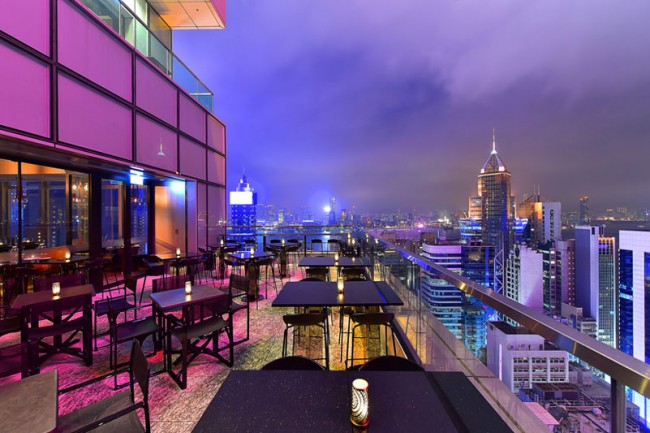
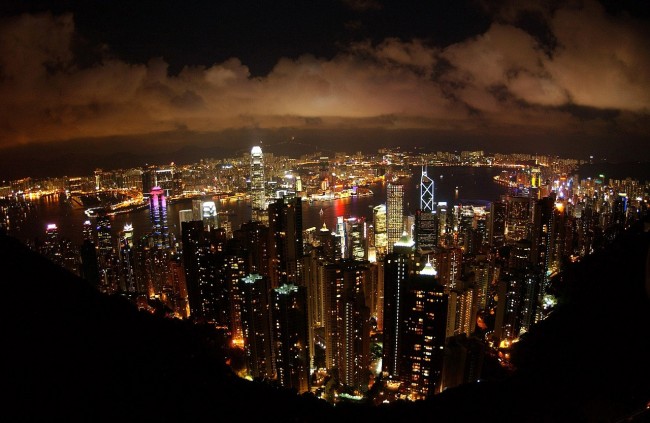
Be it poolside drinks or a lounge with panoramic views, Hong Kong has some amazing bars where you can try tasty concoctions and delicious grub. The city’s rooftop bars give visitors a wonderful glimpse of the city’s skyline. Whether you want to attend a cocktail party or enjoy multi-cuisine delicacies, here’s our take on the best rooftop bars in Hong Kong.


Sevva Rooftop Bar

Wonder at the city’s skyscrapers as you visit the hottest rooftop bar in the city, Sevva, located close to the Central MTR Station. Walk into their spacious penthouse terrace with a vibrant ambiance, and enjoy the brightly lit setup and a 360 degree vista. The décor changes according to the four seasons and their bar menu remains fresh and in tune with the latest trends. It is one of the best designed rooftop bars in the city, designed by the iconic Bonnie Gokson.
Opening Hours: Mon-Sat (12 pm to 2 am)
Price: Fine Dining
Watch Out For: Oyster Sake
Address and telephone number: Prince’s Building 25th Floor, 10 Chater Road Central, Hong Kong, +85-225371388

Ozone at Ritz-Carlton

Nestled on the 118th floor of the tallest hotel in the world, the Ritz-Carlton in Hong Kong, this rooftop bar is an open-air setting decorated with black marble and new age lighting. While the interiors are quirky and artsy in style, the outdoor seating is a spacious lounge that overlooks the Hong Kong Island and provides a scenic view of the Victoria Harbor. Check out the Asian inspired menu with an European twist while you savor creative concoctions like the Vanilla Sky from a leading mixologist – Teresa Moon. 
Opening Hours: Mon-Fri (5:30 pm to 1 am), Sat (3 pm to 3 am), Sun (12 pm to 12 am)
Price: Fine Dining
Watch Out For: Cherry Chocolate Kiss
Address and telephone number: 118/f, The Ritz-Carlton, Hong Kong, International Commerce Centre, 1 Austin Road West, Hong Kong, +85-222632263

Felix

One of the trendiest setups at The Peninsula, Felix is well-renowned for its Avante-garde dining experience and classic interiors. While this rooftop bar boasts wonderful views of the city’s skyscrapers, the modern European cuisine is a fantastic addition, using the freshest ingredients. Felix combines Western flavors with a Japanese tinge, featuring an out-of-the-box menu, and is mostly famous for housing one of the finest collection of wines in the city.
Opening Hours: Mon-Sun (6 pm to 1 am)
Price: Fine Dining
Watch Out For: Othello
Address and telephone number: Salisbury Rd, Tsim Sha Tsui, Hong Kong, +85-226966778

Aqua Spirit

This rooftop bar takes dining to a whole new level offering a blissful experience with its classic décor and lavish menu. The floor-to-ceiling windows give a beautiful touch to the interiors of Aqua Spirit, that presents a fantastic view of Hong Kong’s skyline. Housed on the 29th and the 30th floor of the One Peking Building, Aqua Spirit lets you choose the type of seating you prefer – comfortable westernized seating or a traditional Japanese sunken seating. The bar menu is filled with original mixtures and features a number of signature cocktails.
Opening Hours: Mon-Sun (12 pm to 2 am)
Price: Fine Dining
Watch Out For: Aqua Legend


Address and telephone number: 29+30F, 1 Peking Rd, Tsim Sha Tsui, Hong Kong, +85-234272288


Armani Prive


The sophisticated and glamourous Armani Prive presents a sensuous lounge with captivating views of the city’s skyline and psychedelic lights that enrich the plush seating within. The Armani Bar, with its chic and dynamic vibes, offers an expert collection of cocktails. Featuring a 5000 square foot terrace, the Armani Prive is a popular rooftop bar that presents a globally inspired menu of Italian and Asian delicacies is a heartthrob of Central Hong Kong. 
Opening Hours: Mon-Sun (3 pm to 2 am)
Price: Fine Dining
Watch Out For: Armani Spritz
 Armani/Privé - summer time in Hong Kong

Address and telephone number: 3/F, Landmark Chater (Chater House), 8 Connaught Road, Central, Hong Kong, +85-235832828

Wooloomooloo Prime

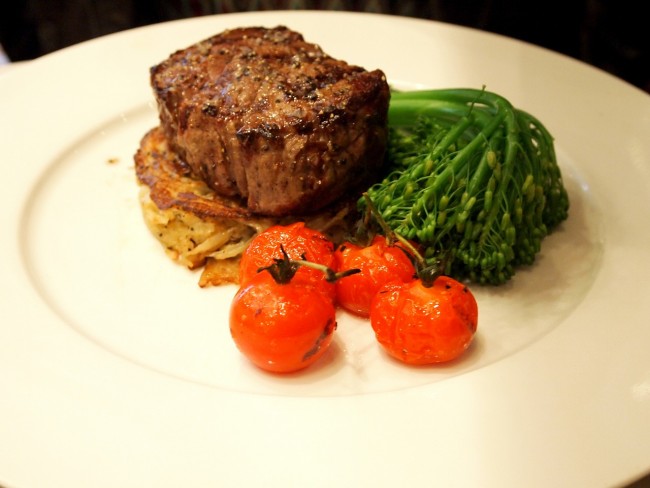
This stunning steakhouse is a wonderful place to catch a drink on a spacious terrace that overlooks the city’s downtown arena. This rooftop bar presents a light décor and a wonderful view of Victoria Harbor and Tsim Sha Tsui, and is most popular during the weekends. Located on the 21st floor of the One shopping mall, the steakhouse displays simple interiors and a fascinating line of ales. Offering from premium Penfolds wine collections to Australian ground beef, this is a cozy hang-out spot ideal for young couples.
Opening Hours: Mon-Sun (11:30 am to 12 am)
Price: Mid-Range
Watch Out For: Australian tomahawk
Address and telephone number: 21/F, The One, 100 Nathan Road, Tsim Sha Tsui, Hong Kong, +85-227713600 

Fu Lu Shou Bar

The super-hip Fu Lu Shou Bar is a trendy hotspot that buzzes with excitement, offering a cool assortment of cocktails and dishes with strong local flavors. This rooftop bar consists of an outdoor kitchen, an open air terrace and a small indoor seating area. While the lounge furniture is more than inviting, the passion red swing seats contrast beautifully with its lively murals and traditional decals. This is a casual and lively place ideal to come with a bunch of friends, where you can savor creative drinks and gorge on snacks like sesame prawn toast.
Opening Hours: Mon-Sat (5 pm to 2 am)
Price: Mid-Range
Watch Out For: Joh Sun
Address and telephone number: 7/F, 31 Hollywood Rd., Central, Hong Kong, Hong Kong, +85-223368812

Two Seventy Degrees Rooftop Bar

Harlan Goldstein’s amazing rooftop bar provides a spectacular view of the city harbor, with a laid back setting that is popular for hosting a variety of summer events. While the music fills the space with hypnotic beats, the bar offers a well-priced menu alongside a creative collection of beverages and delicious cold cut platters. The bar is visited mostly by locals and has a relaxed atmosphere. Although this rooftop bar isn’t as grand as most establishments of the same kind in Hong Kong, it is a comfortable spot to enjoy a drink, located right above the Penthouse. 
Opening Hours: Mon-Sun (5 pm to 12 am)
Price: Mid-Range
Watch Out For: Wild Salmon Steak


Address and telephone number: 31/F, Soundwill Plaza II, Midtown, 1-29 Tang Lung Street, Hong Kong, +85-229700828

Eyebar

Eyebar features a maritime themed restaurant offering panoramic views of the city’s skyscrapers and an outdoor alfresco deck. A unique feature of the Eyebar is the large telescope that gives you a peek at Hong Kong’s best landmarks. While the cocktail menu is elegantly exotic, the interiors are stylishly traditional with beautiful Chinese tiles and huge floor-to-ceiling windows. You can grab a bite of their delicious barbecued sea food delicacies and enjoy them with a whimsical concoction prepared in their open kitchen. 
Opening Hours: Fri-Sat (11:30 am to 2 am)
Price: Mid-Range
Watch Out For: Mango Mamma
Address and telephone number: Shop 3001, 30/F, iSquare, 63 Nathan Rd., Tsim Sha Tsui, Hong Kong, +85-224873988

Sugar

With electronic music pumping the scene, Sugar is an incredible rooftop bar that offers panoramic views of the city and a spacious lounge to enjoy a thrilling party. While the contemporary décor pulls in a corporate crowd, the bar still has a casual touch with its wooden and beige interiors. The cool outdoor deck coupled with a creative list of drinks makes the Sugar a favorite with locals and tourists who love grabbing a sip of the Eastern Summer Punch. 
Opening Hours: Mon-Sat (5 pm to 11 am), Sun (1 pm to 11 pm)
Price: Fine Dining
Watch Out For: Cocktail Piscine


Address and telephone number: 32/F, EAST, 29 Taikoo Shing Road, Taikoo Shing, Hong Kong, +85-239683738
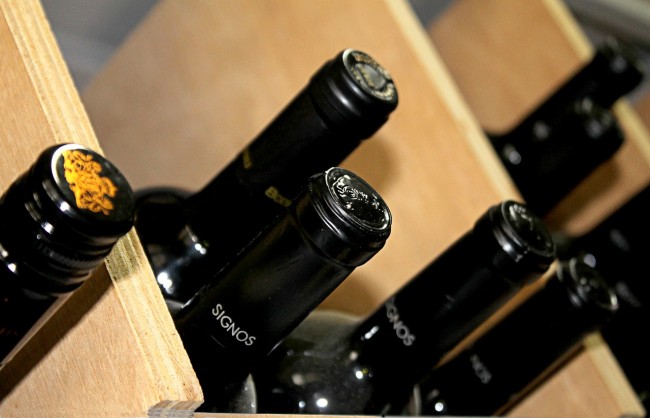
Wine Cellar| © Gadini/Pixabay