Tampilkan postingan dengan label AUSTRALIA. Tampilkan semua postingan

Jumat, 29 Januari 2016

TEEN ACCUSED OF ISIS PLOT TO BOMB COPS USING KANGAROO.

A teenager discussed packing a kangaroo with explosives, painting it with the ISIS symbol and setting it loose on police, according to prosecutors.
Sevdet Besim, 19, is accused of plotting a terror attack in Melbourne on Anzac Day — an annual public commemoration of Australia's war dead.
 

Besim denied four charges of planning a terrorist act during a court appearance on Thursday, the Melbourne Age newspaper reported.
Prosecutors also accuse Besim of communicating with a teenager overseas, as well as planning to run over and behead a police officer on Anzac Day, it said.
A prosecution summary presented to Melbourne Magistrates Court included an account of alleged communication between the two teenagers, including a conversation about using a kangaroo as part of an attack, the Australian Broadcasting Corp. (ABC) reported.
"The conversation continues with Besim detailing what he did that day and they have a general discussion around animals and wildlife in Australia including a suggestion that a kangaroo could be packed with C4 explosive, painted with the [ISIS] symbol and set loose on police officers," the prosecution summary said, according to the ABC.


Copies of the summary document were not available early Thursday on the court's website.
At the time of Besim's arrest in April, police said the alleged Anzac Day plotters had links to Numan Haider, an 18-year-old who stabbed two Melbourne police officers in 2014 and was subsequently shot dead.
Anzac Day is the annual April 25 commemoration of the 1915 Gallipoli landings — the first major military action fought by the Australian and New Zealand Army Corps during World War I.

ALL AUSTRALIAN CLICHES ARE TRUE : MARTIN PARR TALKS BEACH LIFE BEFORE BONDI SHOW.


Martin Parr answers my questions in explosive bursts – pop, pop, pop – like a flashgun being fired straight into my face. His clipped, coruscating replies are often loaded with wit and colour.
It’s somewhat blinding at first; blinding and yet entirely apt. Parr has built his reputation on punchy, super-saturated images that simultaneously expose and delight in the absurd comedy of everyday life, and his use of fill-flash to illuminate his subjects has long been a defining characteristic of his aesthetic. I feel as though I’m one of his subjects.
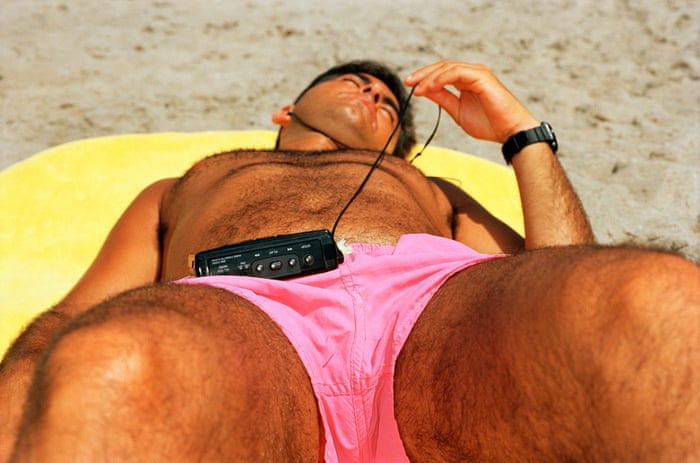
I’m talking to Parr ahead of an exhibition, Life’s a Beach, which opens in Sydney’s Bondi Pavilion Gallery on 31 January, showcasing a body of his work more than 30 years in the making. The images were shot at coastlines around the world, including a couple of frames taken in Australia, and reflect his endless “obsession” with beach culture and its leitmotifs.
Asked why he finds the beach so compelling, Parr recoils as if I’m bonkers: “It’s a no-brainer! The beach is where you can be yourself and you get lots of people who haven’t got many clothes on and it’s interesting and there’s all kinds of habits going on,” he says. Indeed, Parr is a master anthropologist.

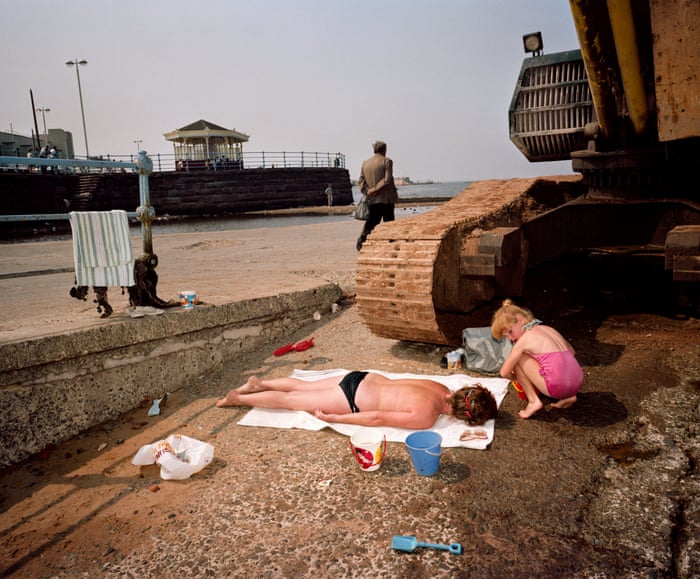
 For those who aren’t familiar with his work, the 63-year-old came to prominence in the mid-1980s for a book of images, The Last Resort, which he made over successive summers in New Brighton – a small, working-class seaside resort in Merseyside, England. He captured scenes of ordinary holiday life which positively outraged photography critics, such was the perceived indignity and mockery within them. There were unaccompanied children with their faces slathered in ice cream, people sunbathing on concrete beside industrial machinery, babies wailing in the sun, bins overflowing with fish and chip papers, and stone-faced pensioners silently living out their days in the supposed misery of it all


Parr was lambasted. His work was dismissed as patronising and as an “acerbic vision of hopelessness”. Only, it wasn’t.
Advertisement
His genuine affection for his subject matter took time to be acknowledged but he is now widely considered one of the finest, most trenchant photographers of our time – a photographer who highlights the brilliance within the mundane and who effectively says: ‘We’re all a bit mad, and that’s fine by me.’ As the critic Gerry Badger put it: “He has the essential pessimism of the satirist – but is also playful and whimsical”.
A couple of the images from The Last Resort, which in 2008 the Guardian ranked among the 1000 artworks to see before you die, are included in the forthcoming show at Bondi. They are joined by photographs Parr has shot in countries around the world – Latvia, India, Japan, Slovenia and Brazil among them – providing a peculiar and revealing tapestry of beach life.


Parr has spent relatively little time photographing in Australia, his most significant trip being to Western Australia in 2012 when he shot the series No Worries. He was excited by what he found.
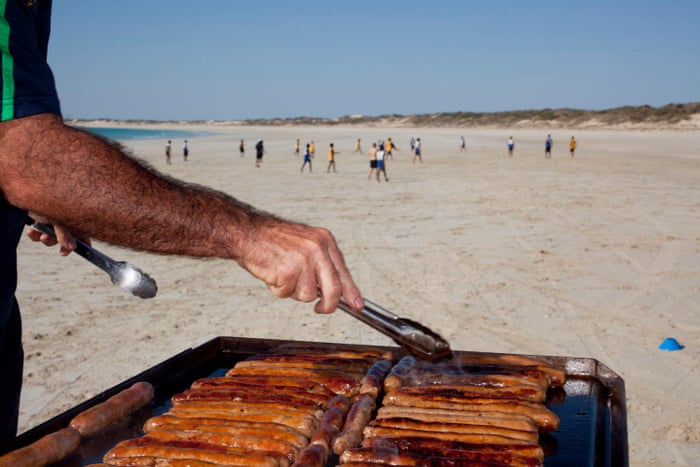
“All Australian cliches are true!” he says. “You go down to the beach, people are cracking the beers, they’ve got the barbie on. It was like walking into a cliche. That’s why I liked it: because I like cliches.
“Sadly I’ve not done the classic Bondi stuff. The only bit I’ve done really is WA when I was commissioned by FotoFreo [a now defunct photo festival based in Fremantle] and we went to Broome. The beach wasn’t an integral part of what I was shooting, but I wanted to sew in a few pictures. But clearly it’s a subject I should come back to and do it properly.”
I tell him I find it odd that he hasn’t explored one of the great beach-loving countries of the world more thoroughly and am met with a typically droll reply: “Australia for me is a long, long way. There couldn’t be anywhere further.”
The suggestion that Broome might have been a tricky spot at which to shoot, given that Parr specialises in densely packed environments, brings similar mirth: “It was tricky insofar as obviously the more people you have, the easier it is to take photos of people: it’s very simple maths."


 Perhaps this explains why the two beach images from Broome – one of sausages sizzling on a barbecue and the other of topless old men – seem a little lifeless, a little barren, in comparison to his usual work. Certainly I find their inclusion in the show rather jarring and would dispute Parr’s assertion that he selected only his “best” beach photos; in my eyes, these photos lack the engaging humour, the compositional quirks and the shrewdness of timing of his most vaunted shots.


Or perhaps I’m missing something? One can become so close to a subject matter or way of life that you become blind to its idiosyncracies and perversions. Maybe there are people in other countries who view these images and think: ‘My god, Australians fry sausages on the beach?!’ After all, The Last Resort hardly made a ripple when seen at Open Eye in Liverpool (near New Brighton); it was “outsiders” who scoffed or took umbrage.
Parr isn’t immune to self-criticism: “I like the fact that we have so many crap photographs in the world. I take a lot of crap ones as well. Out of all the photographers you’ve spoken to, I’ve probably taken more crap pictures than anyone. That’s just a fact of life.”
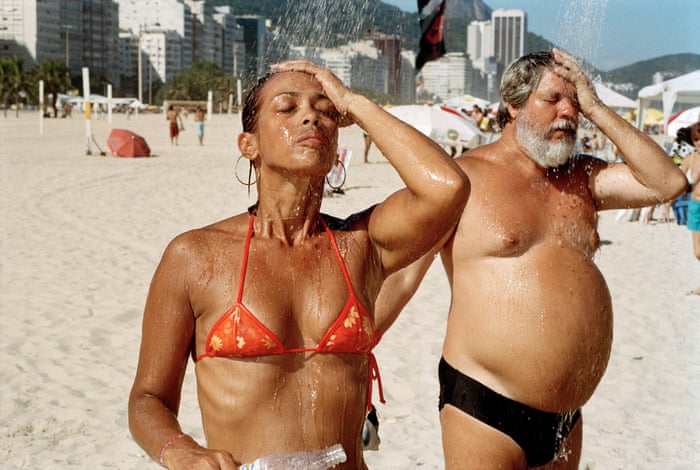
Either way, Life’s a Beach bristles with memorable images, and it is testament to Parr’s ongoing love affair with this subject that he continues to find such gems as the Sachin Tendulkar cardboard cutout on a beach in Chennai, India, or the portly man showering in Rio de Janeiro, Brazil, whose posture perfectly mirrors the woman beside him.

 
After 30 years documenting beach life (not that this is Parr’s only obsession: his wonderful series Autoportrait is similarly revisited time and again), Parr tells me little has changed about the coastal worlds he inhabits.
“The beach is pretty constant,” he says. “The only thing that’s changed is that you get accused of being a paedophile these days if you’re going around with a camera.”

Except, everything has changed. People’s usage and understanding of photography has changed, and their self-awareness has grown too. Parr agrees that the world is now a vainer place, but vanity certainly doesn’t inhibit his roaming lens. He’s adroit enough to unpick the reality from the facade, and to see what makes us human. The last line in Badger’s foreword to the 2010 reprint of The Last Resort sums it up perfectly: “He has a way of looking at the world that is clinically detached, sceptical to a degree, sharply humorous, yet humanistically engaged.”
I tell Parr I remember fondly a piece he wrote for the Guardian in 2010 about how to take better holiday photos. “The instinct is to capture people only when they are smiling around a birthday cake or at a wedding, but never during an argument or funeral,” he wrote. “On holiday, of course photograph the daytrips and good times, but make sure you document when everything isn’t going to plan as well.”
I ask if he has a tip specifically for taking better beach photos and his answer is typically piquant: “Don’t just photograph your own family, photograph anyone and everything. Hows about that? Then we’ll all get into trouble and they can sue the Guardian.”


Kamis, 28 Januari 2016

CHINA 'DAIGOU' SHOPPERS LEADING AUSTRALIAN RETAIL DRIVE.


Personal shoppers are buying up local products to satisfy demand in China. Personal shoppers are buying up local products to satisfy demand in China. Photo: Darren Pateman
Every day in Australia an unofficial network of Chinese shoppers known as "daigou" buy up tonnes of supplies for friends and family back home.
While baby formula remains their most common purchase, daigou have told Fairfax Media that there is a growing demand for fresh food and, with it, a potential bonanza for farm-gate producers.

Daigou shoppers now want to buy fresh Australian fruit such as cherries directly from the primary producers.
Daigou shoppers now want to buy fresh Australian fruit such as cherries directly from the primary producers. Photo: Melissa Adams
Daigou roughly translates as "buying on behalf of" and these shoppers have become notorious for clearing supermarket shelves of baby formula.
Advertisement
One daigou, Sydney-based Sophie He, sends up to 60 tins of baby formula and up to 40 bottles of vitamins to China every week.
Daigou get recommended by word of mouth and gradually build up "trust chains" to buy for more and more people, Melbourne IT consultant Michael Ding says.

Australian baby formula packed up and ready to ship to China. Australian baby formula packed up and ready to ship to China. Photo: Penny Stephens
And it's a lucrative business. Ms He said she charged her customers 25 per cent of the purchase price.
One Melbourne freight company revealed last year it was sending 20 tonnes of shopping to China every week.
The stock-discussion website HotCopper revealed how profitable working as a daigou can be, with one man claiming to earn $600 a week reselling tins of formula to Chinese customers.
Workers and customers at the Chang Jiang International Express store on Swanston Street in  Melbourne package up Australian goods for export to China. Workers and customers at the Chang Jiang International Express store on Swanston Street in Melbourne package up Australian goods for export to China. Photo: Penny Stephens
Melbourne-based Vivian Xing uses an app called WeChat to let people know she offers "daigou shopping" services and, for now, is focused on the huge demand for infant formula.
She sends about 20 kilograms of formula a week to people all over China and takes photos of the purchases inside local stores such as Chemist Warehouse or Priceline to prove its authenticity.
Most Chinese don't understand English well enough to order from Australian websites, she says, and they do not trust the online shops set up by A2 or Bellamy's because counterfeiting was rife online.
Australian vitamins are also a big seller, with Ms He doing a steady trade in Swisse, Blackmores and Thompson.
Baby formula and vitamins are Australia's speciality, Ms Xing says, with daigou in Hong Kong and the US providing beauty products and clothing coming from daigou in France.
But this is changing, with Chinese ordering more and more clothing and food through daigou in Australia.
Because China's customs clears perishable food quickly, cherries, mangoes and peaches can get to their destination within 72 hours.
Recently Ms He has been buying seafood and Australian-grown fruit from agents who package it up with ice for shipping.
Ms He says she would rather buy directly from the primary producers but Google searches did not reveal any who ship small packages directly to China themselves.
Due to Chinese fears of counterfeit products, particularly in food, daigou want to get as close to the source as possible so they can guarantee provenance.
One Sydney-based woman said she had been sending two-kilogram parcels of cherries for $90, including postage, to her family before Chinese New Year on February 7.
She has struggled to find a direct source of Australian cherries this year and ended up going through an agent she met through friends, she says.
Mr Ding says there would be huge demand for Australian beef, eggs and fresh food if daigou could find reliable direct sources and efficient shipping methods.
And, while Chinese don't trust their local retailers to resell genuine products, they do trust personal connections.
And they also trust the daigou's recommendations.

GINA REINHART LOSES TOP SPOT IN FORBES AUSTRALIA'S RICH LIST.

 user posted image


Gina Rinehart is no longer Australia's richest person.
In the past five years Ms Rinehart has topped Forbes Australia's rich list,  but this year she has been unseated by another woman - reclusive American heiress and longtime Australian resident Blair Parry-Okeden.
After the iron ore slump no more Australia's richest person: Gina Rinehart. After the iron ore slump no more Australia's richest person: Gina Rinehart. Photo: Lisa Maree Williams
Ms Parry-Okeden's net worth of $US8.8 billion ($12.5 billion) makes her the country's richest person (again) while Ms Rinehart has fallen to second place with a net worth of $US8.5 billion ($12.1 billion).
Advertisement
Forbes says Ms Parry-Okeden, who grew up in Hawaii and moved to her ex-husband's country of birth Australia decades ago, was recently confirmed to be an Australian citizen.
After her mother's 2007, death she inherited a quarter of US media conglomerate Cox Enterprises, America's third-biggest cable TV company.
This is not the first time Forbes has named Ms Parry-Okeden as Australia's richest person. She first took the title in 2009, overtaking mining magnate Andrew "Twiggy" Forrest for the top spot
Forbes says Ms Rinehart's wealth has slipped $US3.2 billion in the past year, mainly due to falling iron ore prices and a legal ruling which impacted her shareholding in Hancock Prospecting.
Ms Rinehart's wealth erosion was the largest in dollar terms, but fellow iron ore miner Andrew Forrest's wealth took the biggest percentage hit: down 41 per cent, sending him down 12 spots on the rich list to No. 22.
Property baron Harry Triguboff ranks number three on this year's list, with a net worth of $US6.9 billion ($9.8 billion).
Rising rents and increased demand for his Sydney apartments helped drive up Mr Triguboff's fortune by $US1.3 billion, Forbes says.
Property sales of his apartment tower development company, Meriton, are expected to rise 70 per cent this year.
The biggest winner on the rich scale in percentage terms was Atlassian co-founder Mike Cannon-Brookes. His wealth jumped 62 per cent to $US1.78 billion after the successful float of the software company on the US sharemarket in December. Atlassian's co-founder, Scott Farquhar, is right behind him.
James Packer fell two spots to sixth rank with an estimated fortune of $3.5 billion.

TOP 10 RICHEST AUSTRALIANS:

1) Blair Parry-Okeden, $US8.8 billion
2) Gina Rinehart, $US8.5 billion
3) Harry Triguboff, $US6.9 billion
4) Frank Lowy, $US5 billion
5) Anthony Pratt, $US3.6 billion
6) James Packer, $US3.5 billion
7) John Gandel, $US3.2 billion
8) Lindsay Fox, $US2.8 billion
9) David Teoh, $US1.95 billion
10) David Hains, $US1.9 billion


Sabtu, 23 Januari 2016

AUSTRALIA SEEKS REGIONAL TERRORISM COOPERATION AFTER JAKARTA ATTACK.

(L-R) Indonesia's Coordinating Minister for Political, Legal and Security Affairs Luhut Panjaitan talks with Australia's Minister for Justice Michael Keenan during a news conference at the Political, Legal, and Security Ministry office in Jakarta, December 21, 2015.
Reuters/Beawiharta

Australia is seeking regional cooperation to fight the "menace" of violent extremism that will be with the region for some time, the country's justice minister said on Saturday.
A deadly Jan. 14 attack in Jakarta that killed eight people and an August bombing in Bangkok that ripped through a popular shrine killing 20 people, most of them foreign tourists, have injected new urgency for regional counter-terrorism efforts.
"The region is subject to the same threats as the globe is and that is there is a malignant organization that has established itself in the Middle East, ISIL, and they continue to export terror around the globe," Australian Justice Minister Michael Keenan told Reuters in Bangkok during a visit with his Thai counterparts to discuss security issues.
Keenan, who is also Counter-Terrorism Minister, said Australia stood ready to share its expertise with regional governments.
"If we can make those relationships stronger then we should seek to do so because this menace is going to be with us for some time and the more we can do to collaborate, to address it, the safer our people will be."
Jakarta's gun and bomb attack was claimed by Islamic State (IS), the radical group's first assault on Indonesia.
Keenan said Australia has updated its travel warning for Indonesia but has not changed the threat level which remains to "exercise a high degree of caution".
Jakarta has said it is working to stem the flow of Southeast Asian militants traveling to and from Syria and Iraq but police say the nation's porous border makes it easy for people to be smuggled into Indonesia.
"We don't want to change the open nature of our society. We like the fact that this is a very busy region with people passing through," said Keenan.
"That's why intelligence is very important, sharing information about people who might be of concern," he said.
On Tuesday, U.S. President Barack Obama and Australian Prime Minister Malcolm Turnbull pledged to increase cooperation on counter-terrorism and the fight against Islamic State.
Australia, a staunch ally of the United States and its battle against Islamist militants in Iraq and Syria, has been on heightened alert for attacks by home-grown radicals.
Thai Deputy Prime Minister Prawit Wongsuwan last week said Thailand has not found any evidence of IS activities in the country, following reports that IS sympathizers had crossed the Thai-Malaysia border to meet with southern religious leaders.
Since 2004, insurgents have been battling for greater autonomy in Thailand's three Muslim dominated provinces where fighting between Thai security forces and Malay-Muslim separatists has killed more than 6,000 people.

AUSTRALIA DAY 2016 : THE BARBEQUE GOES LOW AND SLOW.


Celebrity chef Adam Liaw says he loves the simplicity of the Australian barbecue.
Celebrity chef Adam Liaw says he loves the simplicity of the Australian barbecue. 
Australia Day is approaching and as cooks all over the country prepare to fire up their barbecues in celebration, the burnt snag is definitely off the menu.
The Aussie barbecue has evolved. These days tong-wielding enthusiasts are embracing global influences, turning down the heat, and transforming the humble backyard barbie into another excuse to pit mate against mate in healthy competition.
"We've probably been brought up with the burnt sausage and well-done steak off the barbecue," Australasian Barbecue Alliance co-founder and general manager Adam Roberts said. "Whoever was doing the barbecue probably said 'That's the way I like them', when in reality they've just buggered it up."
Celebrity chef Adam Liaw says today's Aussie barbecue embraces global influences. Celebrity chef Adam Liaw says today's Aussie barbecue embraces global influences. Photo: Nic Walker
The alliance was formed to promote and develop traditional barbecue and meat-smoking culture, and is the sanctioning body for competitions such as The Big BBQ, being held on Australia Day at Parramatta Park. Its members advocate the "low and slow" style of barbecuing – less heat, more time – usually using smokers and wood-fire barbecues. It's part culinary movement, part sport.
Advertisement
"It's vastly different to chucking a steak or sausage on the barbie and burning it to a crisp," Mr Roberts said. "You have a large piece of meat – a whole brisket, or the whole back end of a pig – cooking for a longer period of time. You end up with a much more tender, flavoursome piece of meat."
Celebrity chef and Sunday Life columnist Adam Liaw​ said cooking over coals was another way to enhance the flavour of meat, and was increasingly popular as people looked to bring out the best in their barbecue.
Chef Ben O'Donoghue says Australians are getting more adventurous with barbecuing. Chef Ben O'Donoghue says Australians are getting more adventurous with barbecuing. Photo: Harrison Saragossi
"You're seeing more emphasis put on the quality of meat and less on marinades," the MasterChef winner said. "When I was growing up, there wasn't a piece of meat that went onto the barbecue that wasn't heavily marinated the day before."
Liaw said he loved the simplicity of the Australian barbecue "and the fact that it does bring in other influences from around the world. You might have Asian salads on the side, you might have American-style barbecue sauces."
Chef Ben O'Donoghue, author of The BBQ Companion and star of TV show Aussie Barbecue Heroes, said Australians had grown "more adventurous in terms of cuisines they're doing on the barbecue".
"People are putting together a culturally refined menu," he said. "If they're doing an American-style one they'll do a funky slaw, a potato salad, sides that match the style of cuisine. Korean barbecue is very popular ... [with] marinades and ferments."
Food media and social media were also having an influence, he said. "There's a greater competitive element to cooking these days," he said. "Between mates, between friends, they're having barbecue-offs.There's some backslapping going on across social media."
O'Donoghue said he loved lamb on Australia Day: "a whole leg of lamb tied in a swaddle of rosemary that's been caressed on the inside with an olive tapenade and anchovies. That's always a real winner".
Sales of lamb lifted more than 35 per cent in the week before January 26 last year compared to the weekly average, no doubt helped by Meat and Livestock Australia's annual Australia Day lamb ad, which this year sparked an avalanche of complaints with a scene in which a SWAT team torches a vegan's kale.

Adam Liaw's five Aussie barbecue tips

  • It's important to rest meat when it comes off the barbecue. Keep a resting tray next to the grill and scatter it with fresh herbs and olive oil to give the meat extra flavour while resting.
  • Hit your potato salad with an umami punch by mixing in a few tablespoons of finely grated parmesan.
  • Cook in courses. There's no need to throw everything on the barbecue at once. I like to start with seafood, then other meats, before finishing with sausages. 
  • Cooking for a crowd? Try the reverse sear method for perfect steaks. Slow-cook a tray of steaks in the oven at 125°C for 45 minutes or until the internal temperature reaches 55°C for medium rare. Rest them well then finish them with a couple of minutes on the barbecue. 
  • Forget lemons, scrubbing with newspaper or ice. The best way to clean a barbecue is to let it burn on its highest heat for 10 minutes then brush it with a stiff wire brush.

Minggu, 27 Desember 2015

CROCODILES INVADE TOWNS SWAMPED BY TROPICAL RAINS


Northern Territory floods: woman dies, hundreds evacuated and saltwater crocs in town 


A woman has died after her car got caught in Northern Territory floods that have forced the evacuation of hundreds of people and brought saltwater crocodiles into remote communities.
Emergency services have warned a renewed peak of flood levels in the area is expected, and urged people still in the area to “seriously reconsider their situation.”
A police helicopter spotted the vehicle in floodwaters about 4km from the remote Beswick community, east of Katherine, on Sunday night. It is believed the elderly woman was one of five people in the car.


“This is the second person who has been washed away in a flooded creek since Christmas,” the NT’s police, fire and emergency commander Bruce Porter said.
“Again I urge people to avoid taking unnecessary risks on the roads and avoid driving into floodways.”
Hopes were fading in the search for a 28-year-old man missing from Peppimenarti since Christmas Day. Heavy rain in the region is hampering the search.
Residents of the remote Nauiyu community – also known as Daly River – reported saltwater crocodiles had made their way into town in the floodwaters. The crocodiles were seen on the local football field and the NT News reported one had been seen taking two dogs.

 Stuart Brisbane, owner-operator of the Daly River Barra Resort, said he had seen a large croc “swimming past the paddock about 50-80 metres away” from the resort.


Almost 470 people have been evacuated by helicopter from Nauiyu since an evacuation order was issued on Boxing Day. They were transported more than 150km to Batchelor where an evacuation centre had been established, before being bussed to Darwin.
Nauiyu resident Nadine Maloney told the ABC adults took turns watching the water rise overnight as it approached the doorstops of houses.
The flood levels reached almost 15m and were appearing to recede according to one local resident, but emergency services have since warned a renewed flood peak above current levels is expected in the area.
“It is not improbable that the river will rise into the mid 15 metre height,” Porter advised.


“Any remaining residents in the Daly River community area need to be aware of this possible height and need to seriously consider their situation. If you are going to be at risk you need to consider your options immediately.”
Brisbane said the flood was the second highest of the three he had experienced in the 10 years he had lived there.
“We normally like floods because the bigger the wet the better the fishing’s going to be,” said Brisbane, who had not been evacuated.
Brisbane’s family home and the fishing resort’s holiday accommodation sit on high ground and the water had not reached any buildings, but they were cut off from all road access, he told Guardian Australia.