Tampilkan postingan dengan label MIDDLE EAST. Tampilkan semua postingan

Sabtu, 30 Januari 2016

SAUDI DEPUTY CROWN PRINCE RAISES EYEBROWS WITH HARD LINE.


Saudi Arabia's Deputy Crown Prince Mohammed bin Salman reviews a Bedouin honor guard in Amman, Jordan on Aug. 4, 2015. © Reuters 
 
TOKYO -- Saudi Arabia inaugurated a new reign in January 2015, with King Salman bin Abdulaziz ascending the throne following the death of his half-brother, King Abdullah bin Abdulaziz.
     Just a year on, Deputy Crown Prince Mohammed bin Salman, son of the new but elderly king, wields enormous influence in the country. Despite his youth, he also holds key posts related to oil and military policies.
     The actions the deputy crown prince takes could hold the key to whether Saudi Arabia, the de facto leader of the Organization of the Petroleum Exporting Countries, is able to deal with the challenges it faces amid slumping global oil prices.
     Deputy Crown Prince Mohammed is known as a tough, work-oriented person. But some analysts have expressed concern he may pursue reckless military policies as relations between the U.S. and Iran thaw, or if oil prices slide further. That could fuel tensions in an already war-torn Middle East.

Who's with me?
In December, Saudi Arabia formed a military coalition of 34 Sunni Muslim nations, saying the alliance is aimed at increasing cooperation in the fight against terrorism. But Saudi Arabia's real aim seems to be countering the growing influence of Iran, its Shiite archrival. The regional powers have been locked in a fierce sectarian struggle that spans several countries.
     Emboldened by the new alliance, Saudi Arabia executed a prominent Shiite cleric with alleged links to Iran earlier this year. After Iranians enraged by the execution attacked the Saudi embassy, the kingdom severed diplomatic relations with Tehran, putting the Middle East at risk of further instability.
     The deputy crown prince Mohammed has played a key role in these military and foreign policy decisions. He became defense minister and assumed other key posts at age 29. It is unusual in the conservative kingdom to put a young man in a position of such responsibility. His promotion is part of a generational change in the country's leadership. But people close to the deputy crown prince say he deserves these key posts based on his ability to get things done and enthusiasm for the job.

Young (Saudi) turk
When King Salman was still serving as governor of Riyadh Province, the deputy crown prince was his father's right-hand man, working on the development and modernization of cities. One official who once worked under the deputy crown prince said the royal did not waste a minute while working on infrastructure development. In fact,some who have worked with the prince wonder when he sleeps.The deputy crown prince is said to take a businesslike attitude toward his subordinates, giving up on those who fail to perform after two warnings.

 The deputy crown prince's relationship with Crown Prince Mohammed bin Nayef is delicate. The crown prince is King Salman's nephew and serves as Saudi Arabia's interior minister. He has an extensive personal network in U.S..In the kingdom's hierarchy, the crown prince ranks second, followed by the deputy crown prince. The two cousins are pillars of the regime.
     But the deputy crown prince has a much higher profile in the current setup, often making appearances at important diplomatic events. Last year, he grabbed a spotlight in  a meeting of leaders from the U.S. and the six countries of the Gulf Cooperation Council. He also held important talks with Russian officials, filling in for his father.
     The crown prince and his aides favor the kingdom's traditional foreign policy of giving priority to relations with the U.S., while the deputy crown prince advocates reaching out to other powers such as China and Russia. At the moment, the deputy crown prince seems to have the upper hand.

Full plate
The deputy crown prince also plays a big role in shaping Saudi Arabia's oil policy. Last spring, King Salman created a supreme council with jurisdiction over state-run oil company Saudi Aramco. The council is headed by the deputy crown prince.
     In an interview with The Economist earlier in January, the deputy crown prince revealed the Saudi leadership is considering an initial public offering of Saudi Aramco shares.
     Aramco has a huge influence on the Saudi economy. The new supreme council is believed to have discussed the IPO issue in accordance with King Salman's wishes. But if the deputy crown prince handles the matter in a high-handed way, it may generate discord within the royal family.
     In addition to working on the reform of Saudi Aramco, the deputy crown prince is believed to be holding talks with Russia behind the scenes aimed at ensuring stability in oil prices. He held formal and informal talks with Russian President Vladimir Putin and other Russian officials last summer and autumn. There is speculation the deputy crown prince discussed with Russian officials the timing of a possible joint oil production cut, although the conflicts in Syria and Yemen were the main issues on the agenda.
     The deepening ties with Russia could earn the displeasure of the U.S., Saudi Arabia's long-standing ally.
     Through these moves, Deputy Crown Prince Mohammed has cemented his grip on the kingdom's military affairs, diplomacy and oil policy. Saudi Arabia's repeated air strikes against Shiite rebels in neighboring Yemen have further inflamed sectarian strife in the Middle East. The deputy crown prince's hard-line stance on the conflict has drawn criticism.
     Global markets, the kingdom's Western partners and its neighbors will all be keeping a wary eye on the young Saudi leader.


QATAR BANS 'THE DANISH GIRL' 

 Qatar pulls plug on 'The Danish Girl,' film about transgender artist

Alicia Vikander was nominated for BAFTA and Golden Globe awards for her "Danish Girl" performance.

Story highlights

  • The film has been nominated for several awards
  • No reason was given for banning the film, which opened over the weekend in several Middle East nations
(CNN)Authorities in Qatar have banned the movie "The Danish Girl," a story about a transgender Danish artist that opened over the weekend in several nations in the Middle East.
"We would like to inform you that we have communicated with the necessary departments and have banned showing the Danish film on movie screens," Qatar's Culture Ministry tweeted Tuesday.
Authorities did not provide a specific reason for banning the movie. Qatar is a conservative Muslim nation.

A fictionalized biopic

"The Danish Girl," has garnered positive reviews, and nominations for several awards, notably BAFTA and Golden Globe nominations for best actor for Eddie Redmayne and best actress for Alicia Vikander.
The film is fiction -- based loosely, however, on the lives of the Danish artists Lili Elbe and Gerda Wegener. Lili and Gerda's marriage evolves, as does their work, as Lili undergoes a gender transition.
The nominations for the Oscars will be announced Thursday, and judging from its previous success, "The Danish Girl" seems likely to receive some Oscar nominations.

Jumat, 29 Januari 2016

ISRAELI VULTURE CLEARED OF SPYING.

 Lebanon returns Israeli vulture cleared of spying

 A vulture stands on a tree branch after receiving treatment at a veterinary clinic in the Wildlife Hospital of Ramat Gan Zoo Safari near Tel Aviv, on 29 January 2016

 Image caption The vulture is now being treated at a wildlife clinic near Tel Aviv for minor injuries
A huge vulture detained in Lebanon on suspicion of spying for Israel has been returned home after UN peacekeepers intervened, Israeli officials said.
The bird, which has a 1.9m (6ft 5in) wing span, flew over the border from an Israeli game reserve and was caught by Lebanese villagers on Tuesday.
They became suspicious as the griffon vulture had a tracking device attached to its tail.
It is part of a conservation project to reintroduce raptors to the Middle East.
Wildlife officials say the vulture was brought from Spain last year and set free about a month ago in the Gamla Nature Reserve in the Israeli-occupied Golan Heights.
Tel Aviv University is involved in tracking the bird, and as well as a GPS transmitter, it had tags on its wings and an engraved metal ring on its leg saying: "Tel Aviv Univ Israel".

'Discreet operation'

Wildlife officials in Israel were alerted to its capture when photos of the tied-up bird appeared on social media.

 A handout image provided by the Israeli Nature and Parks Authority showing their representatives Eldad Eitan (R), Yigal Miler (C), and an officer of the United Nations (L) holding a vulture at the Israeli-Lebanon crossing border Rosh-Hanikra late on 28 January 2016


"In a discreet operation with the Lebanese and with the great help of UN forces and the UN liaison unit, the Israel Nature and Parks Authority was able to return the vulture that was caught a few days ago by villagers of Bint Jbeil, Lebanon," an Israeli statement released on Friday said.
The Lebanese media says the villagers freed the vulture after it became clear it was not on a spying mission.
After its ordeal the bird was weak and was being treated for minor injuries, officials said.
It is not the first time a griffon vulture has been taken to be an agent of the Israeli spy agency Mossad.
Saudi Arabia captured one, also with a Tel Aviv University tracker, in the desert city of Hyaal in 2011, sparking rumours of a "Zionist plot" that were dismissed by Israeli officials.

THE ONE-WAY TICKET TO ISIS CENTRAL.

 In this undated photo, provided to CNN by RBSS, you can see normal life in Raqqa -- once one of Syria's most liberal cities -- before the start of the civil war.

Beirut, Lebanon (CNN)It's a pretty normal bus -- windows slightly cracked, dust, the occasional button missing on the dashboard. But when its passengers say they take it knowing they could be on a one-way ticket to death, they aren't exaggerating.
From the dark and dank underpass that is Charles Helou bus station in central Beirut, leaves the bus to Raqqa. It has done so for years, but now that Raqqa is the capital of ISIS' self-declared caliphate, the bus crosses the most dangerous border in the world. And people do pay to get on it.
In a 24-hour journey, it travels from Beirut, across the border to regime-held Damascus. Then it heads to Palmyra, held by ISIS, before moving north toward Raqqa.


The nine passengers we met were adamant about two things. First that ISIS would most likely let them in to Raqqa. That suggests they know someone there, and they didn't want to go into details. Second, nobody wanted to have their face filmed or name used.
The fear was overpowering and that permeates exactly how you get ready for the trip.
Last cigarettes are smoked. Not as people worry they may not survive the trip, but because ISIS has banned smoking. They've also banned music, and much else that's part of normal lifestyles in the modern world. If you break their atavistic, moral code, you can be flogged, even beheaded.

ISIS checks

So there is a strange cleansing process on the ride. Smokers douse their fingers in perfume and jettison their cigarettes. Music, racy pictures, numbers of friends close to the Syrian regime -- all are deleted from mobile phones. ISIS check these things thoroughly.
The manager of the bus explains the rules for the trip, though it's a journey he never makes.
"A woman that's not dressed right will be sent to Islamic training," he said. "She, of course, needs a male relative to escort her. Men need to leave their beards grown long in their natural state, with mustaches trimmed. Trousers should not be tight and a certain height over shoes. But ISIS realizes when people travel, they can't always look like that, so it's OK."

The bus always comes back empty. ISIS rarely lets people out. Which begs the question, why are they surrendering themselves to life under ISIS? Surely they know what they are getting in to?
One group of passengers has a specific reason to travel. They are accompanying the body of their relative back to be buried in his hometown.
Some shed tears. He died of a heart attack. The process of repatriation is a nightmare. The bus's eventual departure will be delayed, we learn later, by 24 hours, because they have to wait for the appropriate paperwork to be able to take the body out of Lebanon.

Passengers smoke at the ticket office in Beirut's Charles Helou bus station. Cigarettes are banned by ISIS, so this may be their last for a while.

Dangers

The hazards of the route are relayed in the most matter-of-fact chatter.
Sometimes a fighter jet will buzz the coach, flying low. Sometimes the buses are hit by sniper fire. Most of the time they keep on driving.
The manager tells us: "A plane might [drop a bomb] some distance from the bus. It's normal! No one can really pin down where the sniper fire is coming from. That's when the passengers get afraid."
Can people ever leave Raqqa on the bus? We hear two stories that suggest it is possible. One man tells us the sick are sometimes given 15 days' leave to seek medical treatment. If they come back late, their property and home is confiscated by ISIS.
A woman, we are told, has a daughter in Raqqa, who she is trying to get out. When we talk to her, she insists she has been on a trip to the Gulf region and is just on her way home. Dissimilation is a necessary part of life on this bus.
One man tells us, though, of his sorrow for his hometown, where his children have not left the house in the daytime to go to school for four years.
"It used to be my heaven," he says, before ISIS rule. The war against them, the poverty that it caused and now even the trash littering the streets "has made it my hell."

 In this photo from November 6, 2015, an ISIS fighter walks along a street in Raqqa with his 3 wives walking behind him, according to RBSS.

 Men look at a large black jihadist flag in Raqqa on September 28, 2013. In Raqqa today, school is banned -- and even small pleasures, like chocolate, are an unaffordable luxury because many cannot work.


Selasa, 26 Januari 2016


ISIS' JIHADI JOHN PICTURED WITHOUT MASK AND HOLDING AK47 BEFORE HE WAS KILLED.


ISLAMIC State (ISIS) has released images of notorious murderer Jihadi John unmasked and wearing combat gear before he was killed.


Jihadi John Twitter
Mohammed Emwazi, Jihadi John, pictured without his balaclava
In the pictures the sick killer, a Londoner whose real name was Mohammed Emwazi, is holding an AK47 and wearing a camouflaged t-shirt.
Until now, the ISIS jihadi had only been pictured in Syria with his eyes showing while the rest of his face was covered in a black mask.
In the beheading videos, he spoke with with an English accent as he murdered his captives.
Jihadi John Twitter
Jihadi John was killed last November
The two photos of Emwazi were published online today in a report circulated by an ISIS-affiliated media outlet
The photo comes after footage was released showing the terrorist and three of the men behind the Paris massacre in an execution video together.
Ibrahim Abdeslam, Bilal Hadfi and Foued Mohamed Aggad were alongside the British killer when they beheaded 18 Syrian pilots in November 2014. 
Jihadi JohnGetty
Jihadi John with his balaclava on
Bilal Hadfi, a 20-year-old French citizen was one of the Stade de France suicide bombers, while Brahim Abdeslam, a 31-year-old French member of the Molenbeek terror cell living in Belgium, carried out shootings in the 10th and 11th arrondissements.
Foued Mohamed-Aggad, a 23-year-old from Strasbourg, was involved in the brutal slayings at the Bataclan theatre.
ISIS earlier this month confirmed that Jihadi John had been killed in a drone strike in November. 
newspapers with Jihadi John stories Getty
Headlines were dominated in February 2015 by the story of the identification of Jihadi John
Emwazi was first seen with his face covered in a video in August 2014, which showed the beheading of the US journalist James Foley.
He appeared in various other videos, including the execution of British aid workers Alan Henning and David Haines.
The two photos of Emwazi were published online today in a report circulated by an ISIS-affiliated media outlet.
Emwazi was born in Kuwait and moved to the UK with his family when he was six.
He attended state schools, then studied computer science at the University of Westminster before leaving for Syria in 2013.

Senin, 25 Januari 2016

DON'T BEAT YOUR WIFE : AFGHAN FLIPS #BELIKEBILL ON ITS HEAD.

KABUL, Afghanistan — A Facebook page modeled on the wildly popular #BeLikeBill meme targeting social media misconduct and encouraging good behavior is going viral in Afghanistan.
Be Like Bill's Afghan equivalent Be Like Qodos has attracted more 50,000 likes in about a week — big numbers in a country where a small minority has access to the Internet. In Dari and Pashto, the country's main languages, it advises users to act considerately and not be showoffs — but in culturally specific ways.


"Qodos sees a woman driving. Qodos does his own things and does not stare at the woman. Qodos is a nice person. #BeLikeQodos," says one post.
The messages are simple and target daily behavior, from littering to harassing women on the street. They have also inspired prominent activists and even politicians to take on issues and post messages.
Image: Be Like Qodos meme
The Facebook page Be Like Qodos is modeled on the wildly popular #BeLikeBill meme. Facebook
The former head of Afghanistan's intelligence service Amrullah Saleh took aim at official corruption in one post: "The Attorney General asks Qodos for bribe. Qodos does not want to pay bribe. What should Qodos do?"
The question is sadly appropriate in Afghanistan, which ranks 172 out of 175 on Transparency International's 2014 Corruption Perceptions Index.
Understandably for a country that has lived through decades of war and suffers desperately high rates of domestic violence, Be Like Qodos can get pretty dark.
For example: "Qodos does not beat his wife. Qodos respects his wife. Qodos is a good person. Be like Qodos."
Be Like Qodos isn't reaching the masses, directly at least. Around 12 percent of the population has access to Internet and only half of its online community uses Facebook, according to Internet World Stats, a website that monitors the usage.
Related: Photo of Mutilated Woman Sparks Outrage in Afghanistan
But Afghanistan netizens often have an outsize impact, according to democracy activist Omaid Sharifi.
"The majority of those on Facebook are the educated and most influential segment of the society," he told NBC News. "The message spreads much quicker, especially if it becomes viral ... it becomes talk of the town and households."
Social media has already become an important tool not only for activists and politicians, but also for religious leaders.
After a woman was lynched by an angry mob in Kabul on accusations of disrespecting the Quran, videos and photos posted on Facebook provoked nationwide shock and widespread protests to bring those responsible for the murder to justice.

"Afghan social media users are different from their peers elsewhere," said a founding member of Impassion Afghanistan, the country's first digital media company. "In a largely illiterate country, the Afghan social media community is largely educated, upwardly mobile young people — that's the meme-maker demographic, the group that defines popular and acts as influencers of social behavior."
The member of Impassion spoke on the condition of anonymity because he was afraid of reprisals for his online statements.
NBC News contacted Be Like Qodos' Facebook administrator for a comment but did not hear back.


ROYAL PAINS : TWO PRINCES VIE FOR POWER, MAKE A MESS. 

A rivalry between two princes may explain Saudi Arabia's sudden eagerness to pick fights at home and abroad, as the two men spark one international disaster after another while vying for the kingdom's throne.
"To understand the Saudi royal family, you don't go to the Kennedy School of Government," says Bruce Riedel, the CIA's former national intelligence officer for the Middle East. "You read Shakespeare!"
The struggle between Crown Prince Muhammad bin Nayef and Prince Mohammad bin Salman has all the elements of Elizabethan drama, including strange alliances, ambitious courtiers - and an ailing, ancient king who may be mentally incompetent.
Diplomatic sources and U.S. officials believe 80-year-old King Salman, with whom Secretary of State John Kerry is scheduled to meet in Riyadh this weekend, shows signs of dementia. One official said that during a recent meeting, the king was only able to follow the conversation by pausing while an aide in another room typed a response that the king then read from an iPad. Some in the U.S. government believe that when King Salman declined to come to Camp David last spring to meet with President Obama, he was not just snubbing the president but trying to avoid embarrassment in front of world media.
The princes who would take his place may be first cousins, but they're polar opposites. "MBN," as Crown Prince Muhammad bin Nayef is known, is 55 and a trusted U.S. ally. The interior minister and crown prince rose to power on his slow, steady success as head of the Saudi counterterrorism program, where he became a favorite of the CIA. He was sometimes also known as the Prince of Darkness because of his rank, his job in intelligence, and his night-owl habits.

Image: SAUDI-KING

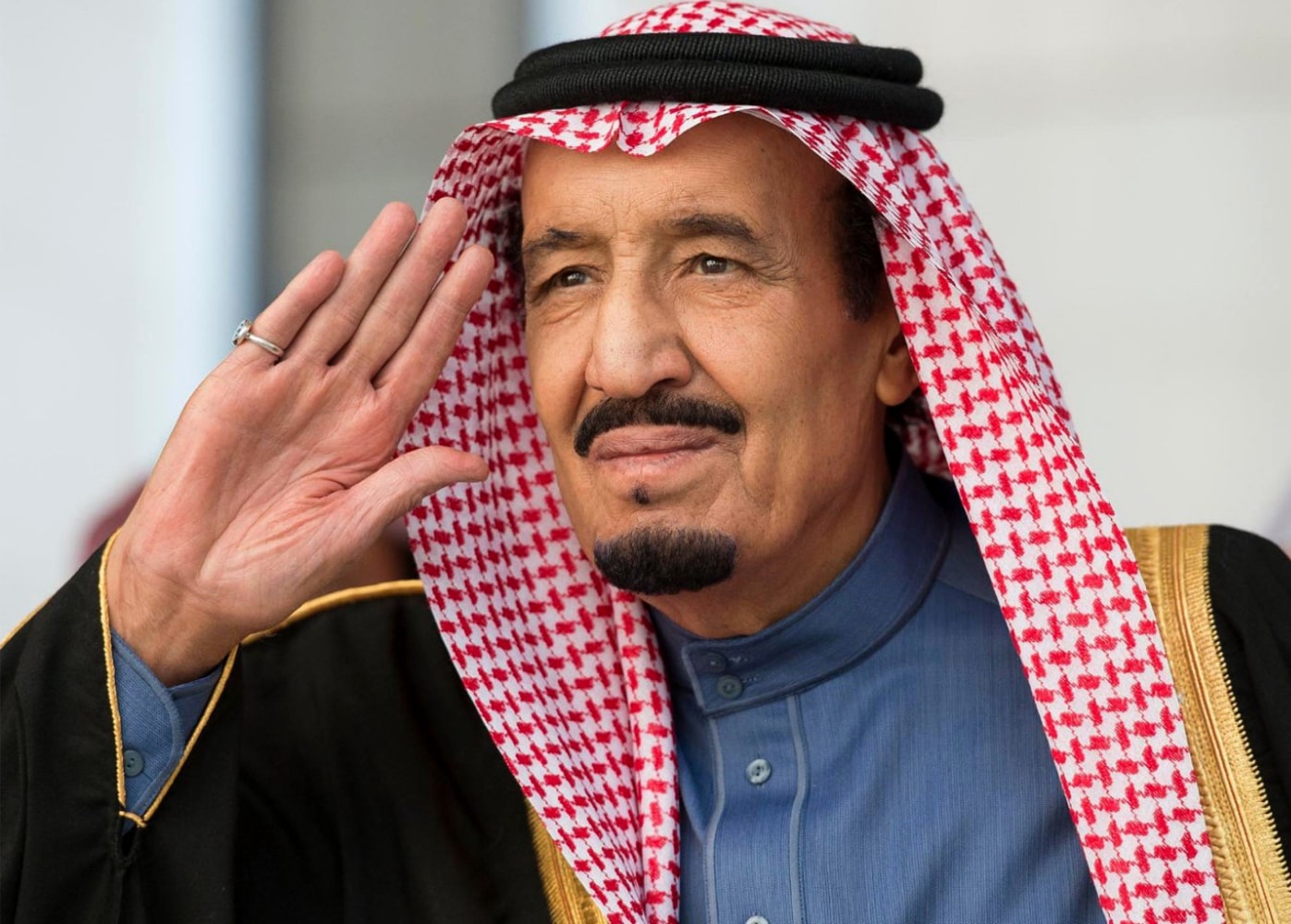
Saudi King Salman bin Abdulaziz salutes the Kingdom's national anthem as he arrives to inaugurate the works of the Shura Council in Riyadh. Photo was made available on Dec. 23, 2015. Saudi Press Agency / Handout
"MBS," Mohammad bin Salman, is King Salman's son. Just 29, he's the defense minister and a savvy publicity hound who shot to prominence in 2015 as the architect of Saudi Arabia's war against Yemen's Houthi rebels .
"Bin Salman is a pop idol," notes Riedel, who is now at the Brookings Institution. "His picture is all over Saudi social media, on television, on billboards. There are pop music songs about him!"
Bin Salman's trips to Russia, France and the U.S. were heavily covered in Saudi papers and burnished his image with the huge chunk of the kingdom's population that is under 30. "They can see themselves in him," said Riedel. "The system didn't normally operate that way."
U.S. officials say the younger generations of the Saudi public seem energized by bold action, and the princes are competing for public favor by seeing who can take the most aggressive stance towards the nation's internal and external enemies. But their bold actions have brought risk and ruin. The byproducts of their power struggle now include mounting tension with Iran, an increasingly costly military quagmire in Yemen, and protests by Shiites around the world.
Last month's beheading of Nimr al-Nimr, a Shi'ite cleric, which U.S. officials strongly believe was pushed by Prince bin Nayef, has led to a break in relations between Saudi Arabia and Iran and a wave of condemnation in the West. A war against the Iranian-backed Houthis in Yemen, pushed by bin Salman, had initial success but is now a stalemate that costs the kingdom $200 million per day. Last year's decision to keep pumping oil in the face of declining prices, which both princes backed, has shrunk Saudi Arabia's economic power and led to lower revenues and vast cuts in social services.
The rivalry is the result of an odd arrangement the royal family made after King Abdullah died in January 2015. The family's Allegiance Council anointed Salman king and bin Nayef crown prince.
There were multiple rationales for appointing bin Nayef, aside from his counterterrorism work. He is the son of the late Prince Nayef, who would have been in line for the throne if he hadn't died before Abdullah.
The new King Salman, however, then appointed his son, Mohammad bin Salman, deputy crown prince, placing him directly behind bin Nayef in the order of succession.
Which of the two princes will win in the end? Salman has a very high opinion of his son. "The king thinks the sun shines out of the boy's backside," said Simon Henderson, director of the Washington Institute's Gulf and Energy Policy Program. When Secretary Kerry meets with King Salman this weekend, he will also be meeting with young bin Salman.

The public applauded the young prince's aggressive stance in Yemen. "To them, Saudi had never been so bold," said a Saudi journalist who wished to remain anonymous.. "The Yemen operation had finally upped the ante for Saudis. Saudi Arabia didn't need any more nurse maids. He represented them, he was in touch with them.
The U.S. is less enthusiastic. Though he has compared himself to Winston Churchill and Margaret Thatcher, bin Salman is not as enamored with the West as his older rival.
Foreign intelligence services also question his decision-making. In December, the BND, Germany's intelligence agency, publicly released an extraordinary and scathing analysis of bin Salman, saying he is behind the kingdom's "impulsive policy of intervention." The minister of defense, the paper stated, "harbors a latent risk that in seeking to establish himself in the line of succession in his father's lifetime, he may overreach."
Bin Nayef is favored --it's hardly an exaggeration to say beloved -- by the United States. More than one U.S. official has privately said bin Nayef is the man the U.S. wants to be king.
When King Salman skipped last May's Camp David summit on Syria, seen as an affront to President Obama, he sent the two princes. Obama praised both but particularly noted bin Nayef's counterterrorism role.
"Mohammed bin Nayef has been a partner with us on counterterrorism work and security work for a very long time. So we have great admiration for him," said the President. "This is the first time that we had had a chance to work closely with the Deputy Crown Prince, and I think he struck us as extremely knowledgeable, very smart, I think wise beyond his years."
A senior U.S. intelligence official went even further, telling NBC News, "Crown Prince Muhammad bin Nayef is a strong and committed partner to the U.S., and he possesses an in-depth understanding on a range of security related issues. His pragmatic, proactive leadership in addressing complex security issues cannot be overstated."

Here's one example cited by Riedel: When al-Qaida planted bombs on UPS and FedEx planes headed from Yemen to Chicago on the eve of the 2010 U.S. congressional elections, MBN called the White House and gave President Obama's terrorism advisor -- now CIA Director --John Brennan the tracking numbers for the deadly containers. The planes were then detained at stopovers and the bombs removed.
It's not surprising. Bin Nayef has had an open line to the last four CIA directors, say U.S. officials. During the early post-9/11 years, bin Nayef would visit the U.S. four times a year to meet with his White House counterpart, Fran Fragos Thompson, sessions facilitated by bin Nayef's fluent English, learned in Oregon, where he attended Lewis and Clark College. Bin Nayef also studied at the FBI in the late 1980s, and at Scotland Yard's antiterrorism institute between 1992 and 1994.
Another western diplomat told NBC News, "He is clearly very smart and ambitious but also focuses on what needs to be done and I would definitely describe him as a doer. One of the smartest things about him is that he has built up a team over the years that has a broad range of expertise and they are extremely loyal to him and if you look at the results successful."
And he is no shrinking violet when dealing with the media. He will often leak tales of derring-do to the Saudi and other Middle Eastern media. No billboards, just a steady stream of positive stories with him as the hero.
The older generation of Saudi princes, who are closer in age to bin Nayef, also question why King Salman has invested so much power in his 29-year-old son, according to the Saudi journalist.
But whether the old guard's regard for bin Nayef and American affection for him will help him become king remains to be seen.

Image: SAUDI-CONFLICT-COALITION

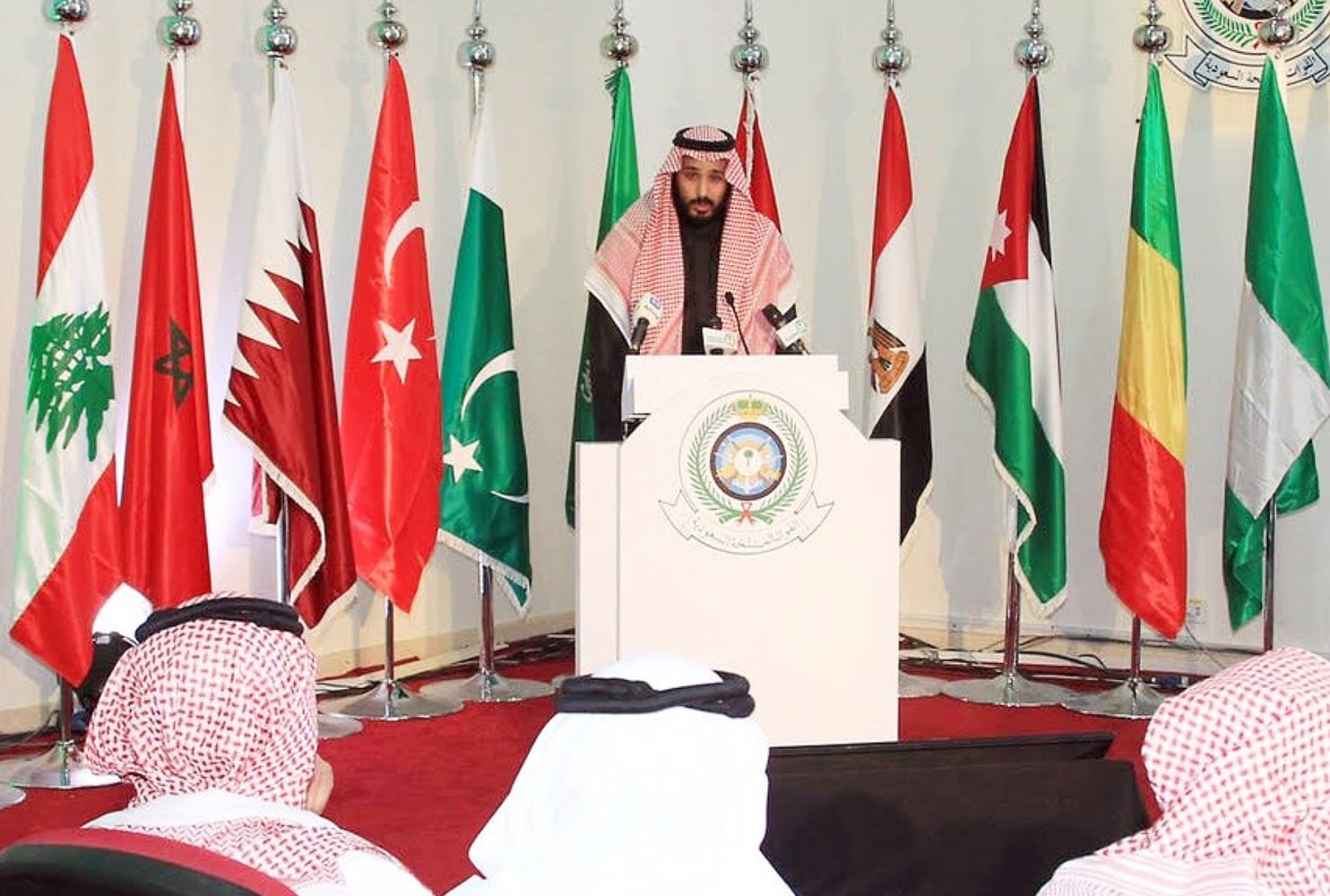
Saudi Defence Minister and Deputy Crown Prince Mohammed bin Salman holds a press conference on Dec. 14, 2015, at King Salman airbase in Riyadh. According to media reports, Saudi Arabia announced the formation of a military coalition of 34 countries including Gulf states, Egypt and Turkey to fight "terrorism" in the Islamic world. but the alliance excludes regional rival Iran and several countries facing ongoing violence. Saudi Press Agency / via AFP - Getty Images
"The fact the U.S. officials like him can be as much as hindrance as a help and he's caught up in what is best described as a battle royale," said Henderson, who added that bin Nayef "feels threatened by Mohammed bin Salman and would like to sideline him."
Riedel thinks the U.S. may be making a mistake in pushing bin Nayef as hard as they have. He's no reformer, says Riedel, noting that for dissidents in the Middle East, bin Nayef is the "public face of repression in the kingdom," equating dissent with terror. Some of the "team" he has built up are informants.
Riedel and others in the U.S. government, believe bin Nayef, who still controls the counterterrorism apparatus, had to be part of the decision-making process that led to al-Nimr's execution. Another U.S. official said, "It's in his portfolio."
How does it end? Not well is the experts' consensus. Bin Salman controls access to the royal court along with his mother. Thus, Riedel says, bin Nayef, as crown prince, cannot meet with the king without his deputy's permission.
Moreover, the king may not even be competent enough to control his succession, according to multiple sources. "Will the son connive with the favorite wife to deny Bin Nayef?" asks Reidel. "It happened in Jordan."
But bin Nayef is a survivor, literally. He's survived assassination attempts --at least three and possibly four -- the most serious in August 2009 when the brother of al Qaeda bombmaker Ibrahim al-Asiri blew himself up while shaking hands with him. Bin Nayef suffered minor burns.
"So he has luck," said Henderson, "which is seen as a valuable asset in Saudi culture."

Sabtu, 23 Januari 2016

SAUDI ARABIA'S HIGHEST ISLAMIC CLERIC : CHESS IS HARAM AND A WASTE OF TIME.

 Saudi Arabia's highest Islamic cleric 'bans' chess, claims game spreads 'enmity and hatred'


Saudi Arabia’s highest religious cleric has declared chess “haram”, meaning it is forbidden for Muslims, while claiming the game shows “enmity and hatred”.
Sheikh Abdul Aziz bin-Abdullah al-Sheikh, the Grand Mufti, made the proclamation while taking questions during his weekly television show.
“The game of chess is a waste of time and an opportunity to squander money. It causes enmity and hatred between people,” he said, according to a translation by Middle East Eye.
Sheikh-Abdul-Aziz-bin-Abdullah-al-Sheikh.jpg
Sheikh Abdul Aziz bin-Abdullah al-Sheikh, the Saudi Grand Mufti, at the Shura Council in Riyadh in 2008
 
Abdullah reportedly compared it to a pre-Islamic Arabian game called “maisir” which was forbidden by the Koran.
His fatwa does not constitute a ban in Saudi Arabia as it does not carry the force of law, but it was provoking debate in the country today.
Musa Bin Thaily, who presides over the Saudi Chess Association’s law committee, said a planned chess tournament in Mecca would be going ahead on Friday.
Pointing out that the Grand Mufti’s proclamation is old, with a YouTube video showing it put online last month, he referenced a previous fatwa that banned chess being used for profit, gambling or interrupting prayers and other religious duties.

IRAN'S LEADER SAYS NEVER TRUSTED THE WEST, SEEKS CLOSER TIES WITH CHINA.


Iran's Supreme Leader Ayatollah Ali Khamenei on Saturday called for closer economic and security ties with China, saying Iran had never trusted the West, as the two countries agreed to increase bilateral trade more than 10-fold to $600 billion in the next decade.Iran's most powerful figure told Chinese President Xi Jinping during a visit Iran wanted to expand ties with "more independent countries", adding the United States was "not honest" in the fight against terrorism in the region.
"Iranians never trusted the West... That's why Tehran seeks cooperation with more independent countries (like China)," Khamenei said.
ADVERTISING
"Iran is the most reliable country in the region for energy since its energy policies will never be affected by foreigners," Khamenei was quoted by his official website as saying at a meeting with Xi.
Xi is the second leader of a U.N. Security Council member to visit Tehran since the nuclear deal Iran struck with world powers last year. Russian President Vladimir Putin visited Tehran in November.
Iran emerged from years of economic isolation this month when the United Nations' nuclear watchdog ruled it had curbed its nuclear program, clearing the way for the lifting of U.N., U.S., and European Union sanctions.
"Iran and China have agreed to increase trade to $600 billion in the next 10 years," President Hassan Rouhani said at a news conference with Xi broadcast live on state television.
"Iran and China have agreed on forming strategic relations (as) reflected in a 25-year comprehensive document," he said.
Iran and China signed 17 accords on Saturday, including on cooperation in nuclear energy and a revival of the ancient Silk Road trade route, known in China as One Belt, One Road.
"China is still heavily dependent on Iran for its energy imports and Russia needs Iran in terms of its new security architecture vision for the Middle East," said Ellie Geranmayeh, policy fellow at the European Council on Foreign Relations.
"Iran plays quite an integral role for both China and Russia’s interests within the region, much more than it does for the Europeans," Geranmayeh said.
NEW MARKETS
Khamenei said Iran would never forget Chinese cooperations during the sanctions.
"The China-Iran friendship ... has stood the test of the vicissitudes of the international landscape," Xi was quoted as saying by China's Xinhua news agency.
The Chinese state-backed Global Times newspaper said in an editorial on Saturday that China hoped to improve ties with Iran as part of its sweeping plan to rebuild trade links with Europe and Asia and carve out new markets for its goods.
"China is of course considering its self interest in strengthening cooperation with Iran, especially at a time when China is in the midst of expending efforts to push forward the One Belt, One Road initiative, Iran is an important fulcrum," the paper said.
While China seeks closer ties with Iran, earlier this week it signaled its support for Yemen's government, which is fighting an Iran-allied militia, during Xi's visit to Saudi Arabia, Iran's rival for influence in the region.
Iran has called on China to join the fight against the Islamic State militant group and play a more active role in the region.
Tehran is widely credited with convincing Russia to start its military intervention in Syria and join the fight against Islamic State.
"Although China and Russia backed U.N. sanctions against Iran on its nuclear program, they were also heavily pushing for special waivers to continue trading with Iran," Geranmayeh said.
"Iran had a relationship both politically and economically with China and Russia for the last ten years in ways that it hasn't had with Europe. So it’s quite natural to see it opening up first to these countries."

Jumat, 22 Januari 2016

INCOME, SALES TAXES PROPOSED.


 The state should also ponder raising the cost of public services and cut government spending.

Dubai: Kuwait’s Emir Shaikh Sabah Al Ahmad Al Sabah has said that the country plans to cut heavy subsidies on fuel and power in a bid to offset a fall in oil revenues.
“We will lift subsidies and will raise the prices of petrol, electricity and water” and reduce subsidies for other services, a Kuwaiti daily quoted the Emir as telling editors of local newspapers.
Kuwait is the only member of the six-nation Gulf Cooperation Council (GCC) that has not hiked the prices of petrol and power after income from oil plunged.
Saudi Arabia, the UAE, Qatar, Oman and Bahrain have either hiked or liberalised fuel and power prices, saving billions of dollars. The Emir however did not give any timeframe for the measures.
In other steps to compensate for revenue lost from the plunge in oil prices to their lowest level since 2003, Kuwait’s Finance Minister Anas Al Saleh said the country should consider introducing income, corporate and sales taxes.

The state should also ponder raising the cost of public services and cut government spending, Al Saleh said, according to a statement released by the Finance Ministry.
The Emir on Wednesday said that belt-tightening was in his country’s future when he urged parliament to cooperate with the government to pass laws to reduce the budget deficit.
In Saudi Arabia, the Shura Council is considering proposals to revise the investment strategy of the kingdom’s social insurance fund in order to raise returns, the advisory body said in statement posted on state news agency SPA. The Shura Council’s finance committee also recommended that the General Organisation for Social Insurance consider tying retirement benefits to the inflation rate, SPA said.


Kamis, 21 Januari 2016

IRAQ PM : 3 AMERICANS MISSING IN BAGHDAD WEREN NECESSARILY KIDNAPPED.

 Three Americans Missing in Baghdad Might Not Be Kidnapped: Iraq PM


Three Americans missing in Iraq might not have been kidnapped, Iraq's prime minister said Thursday.
The State Department — and Iraqi officials — have been working to locate Americans, who were reported missing over the weekend. One Iraqi official told NBC News authorities believed a Shiite militia, many of which have ties to Iran, was holding the Americans.

Three Americans missing in Iraq might not have been kidnapped, Iraq's prime minister said Thursday.
The State Department — and Iraqi officials — have been working to locate Americans, who were reported missing over the weekend. One Iraqi official told NBC News authorities believed a Shiite militia, many of which have ties to Iran, was holding the Americans.
FROM JAN 18: Americans kidnapped in Baghdad 0:29
Republican Sen. Marco Rubio also suggested the Americans were kidnapped by Iran-backed militias, saying the incident might be tied to the recent release of U.S. prisoners in Iran.
Iraqi Prime Minister Haider al-Abadi, however, said Thursday he wasn't aware of any Iranian link in the case of the missing Americans.
"I doubt it very much," he said ahead of a meeting with U.S. Secretary of State John Kerry in Switzerland.
"We don't know that they were kidnapped," he added. "They just went missing."


TALIBAN TARGETED TV WORKERS FOR PROMOTING 'NUDITY'.

 Taliban Claims Responsibility for Targeting Tolo TV Workers


KABUL, Afghanistan — The Taliban says it was behind a bomb attack targeting TV station workers that left seven people dead in the Afghan capital, months after promising to exact revenge for what it said was false and unfair reporting.
The Taliban "made good on its promise of targeting Tolo TV, the country's largest network for promoting obscenity, irreligiousness, foreign culture and nudity," according to a statement posted by its media arm on Thursday.

According to the statement signed by Taliban spokesman Zabihullah Mujahid, the terror organization was not attacking the media in general. Instead it was targeting what it called "an intelligence network opposing our national unity and our religious and national values."
The Taliban threatened Tolo in October after it reported allegations of summary executions, rape, kidnappings and other abuses by Taliban fighters during the battle for the city of Kunduz. The Taliban briefly captured and held Kunduz before being dislodged by U.S.-backed Afghan forces. The Taliban also threatened 1TV, another popular station.
Tolo has also angered the Taliban and other conservatives in Afghanistan by broadcasting foreign soap operas, showing women on television and running talent shows featuring singing and dancing.


On Wednesday, Interior Ministry spokesman Sediq Sediqqi told NBC News a bomber in a Toyota targeted the minibus outside the Russian Embassy in Kabul. He said four of the seven dead were women and that 27 civilians were injured — mostly production-company employees.
The attack was broadly condemned.
"Murdering those who work to enlighten, educate, and entertain will not stop Afghans from exercising their universal human right to freedom of expression," according to a statement issued by the American Embassy on Wednesday evening. "A vibrant media is one of the great successes of the Afghan people over the past 14 years."
Image: Image: A policeman inspects a bombed bus A police officer inspects a bombed bus owned by Afghanistan's biggest media organization, Moby Group, which was targeted by the Taliban in Kabul on Wednesday. Moby owns the most popular television station, Tolo TV, and a production company called Kaboora.


Rabu, 20 Januari 2016

IRAN'S SUPREME LEADER CONDEMNS MOB ATTACK ON SAUDI EMBASSY.


TEHRAN — Iran’s highest leader strongly denounced on Wednesday a mob attack on Saudi Arabia’s embassy in Tehran this month, saying the event was “very bad” and “detrimental to the country and Islam.”
The embassy attack followed the execution of a prominent Shiite cleric in Saudi Arabia, and it seemingly played into the Saudis’ hands by shifting the focus of global outrage to Shiite Iran from the Sunni kingdom. The attack led Saudi Arabia and several of its allies to cut ties with Iran.
Analysts said the comments from the Iranian supreme leader, Ayatollah Ali Khamenei, could be tied to a meeting of the Organization of Islamic Cooperation in Jidda, Saudi Arabia, on Tuesday, where the embassy attack is high on the agenda.

Iran’s foreign minister, Mohammad Javad Zarif, was even more critical of the attack. “This was an act that we were not proud of,” Mr. Zarif told an audience on Wednesday in Davos, Switzerland, at the World Economic Forum. “It was an act against our security, our sovereignty, and we are prosecuting the people who committed that horrendous act.”
As he has in the past, Mr. Zarif said Iran was eager to work with its neighbors, including Saudi Arabia, to resolve regional issues, particularly the war in Syria. “I think our Saudi neighbors need to realize that confrontation is in the interest of nobody,” he said. “Iran is there to work with you. Iran does not want to exclude anyone from the region. There is no need to engage in a confrontation.”
Despite Mr. Zarif’s conciliatory language, Iran and Saudi Arabia are engaged in a bitter sectarian proxy war in Syria, with Tehran backing President Bashar al-Assad and Riyadh propping up the rebel forces opposing him.
In remarks to election officials that were published on his website, Khamenei.ir, Ayatollah Khamenei also weighed in on a dispute that has the potential to shape Iran’s political course for the next several years. He voiced strong support for a 12-member vetting committee that is said to have disqualified nearly all reformist candidates in coming elections for the Majlis, or Parliament, and for the Assembly of Experts, a council that in the future will elect his successor.
The vetting committee, the Guardian Council, which has been severely criticized by the reform camp, has not publicly explained its actions. In his remarks, Ayatollah Khamenei said that mistakes could be made but that they “don’t justify attacks on legal entities.” If upheld, the bar on reformist candidates would mean that President Hassan Rouhani, who calls himself a moderate, will in all likelihood confront a hostile Parliament if he tries to introduce measures that he has promised to expand personal freedoms.
Ayatollah Khamenei went even further, making it clear that the reformists faced an uphill battle to exert any influence in the immediate future.
“I have said that even those who are against the establishment should take part in the election,” he said. “I did not, however, mean that those who are against the establishment must be allowed to find their way into the Majlis. You do not find any country in the world where people who are against the system are allowed into any decision-making bodies.”


OIL PRICE CRASH: rout reaches $27 as Opec warns US shale will be forced to relent.

 A Valero Energy Corp. oil refinery stands in Corpus Christi, Texas, U.S., on Thursday, Jan. 7, 2016. Crude oil slid Thursday to the lowest level since December 2003 as turbulence in China, the worlds biggest energy consumer, prompted concerns about the strength of demand. Photographer: Eddie Seal/Bloomberg


Oil slumped to below $28 a barrel in early morning trading on Monday - its lowest level since September 2003 - as traders digested news of Iran's return to the world's over-supplied markets.
Brent crude shed 1.3pc to fall as low as $27.70 before rebounding by more than 2pc to $29.
The slide came after Opec said persistently low prices would finally begin to bite for rival producers in 2016, forcing the US and Canada to cut back on production this year.


In its latest monthly review of the oil market, the group said non-Opec supply would shrink by 660,000 barrels a day this year, above previous estimates of just 270,000.
The forecast seemingly vindicates the cartel's landmark decision to ramp up production in order steal a march on higher cost producers such as US shale.
But shale drillers, as well as producers in Canada and Russia have proven resilient in the face of the 18-month price crash - which is now the worst in the post-war era. Non-Opec production grew by more than expected in 2015 to 1.23m barrels a day, said the report, which predicted that 2016 was finally the year markets began to rebalance.

Oil prices have collapsed by 75pc since the summer of 2014. Record stockpiles have also put pressure on the world's storage capacity, forcing prices into negative territory in some parts of the US. One major US refiner - Flint Hill Resources - said it would now charge producers -$0.50 a barrel for North Dakota South - a variant of crude.
Saudi Arabia has led the charge in maintaining output, producing 10.25 million barrels a day in December, a hike of 750,000 barrels a day from the end of last year.
Analysts said the price rout is expected to deepen as Iran has vowed to pump an additional 500,000 barrels a day following the formal lifting of its sanctions over the weekend.
International companies are now free to invest in the Islamic Republic's oil resources as the ban on currency conversions is lifted and Iranian oil is available to purchase on international markets.


"Independent oil companies are highly interested in low-cost oil assets," said Bjarne Schieldrop, chief commodities analyst at SEB.
"On the other side, Iran has indicated highly favourable investment terms for international oil companies."
But Tehran's need for huge investment in its oil industry means an immediate expansion of its production to pre-sanction levels is not yet on the cards, said Al Stanton at RBC.
Iran has resisted calls from Saudi Arabia to hold back on production in a bid to stabilise the glutted oil market. The rift saw Opec fail to agree on a formal production target for the first time in its recent history in December.
Saudi oil minister Ali al-Naimi said he was "optimistic" that major producers would eventually come together to help rebalance the market.
“Market forces as well as the co-operation among producing nations always lead to the restoration of stability. This, however, takes some time," Mr al-Naimi said on Monday.


Oman, which is the largest Gulf producer to sit outside Opec, said it was ready to co-operate and cut back on production if other nations also relented, according to its oil minister, Mohammed Al-Rumhy.
Opec said it expected oil demand to pick up this year, revising up estimates by 1.7m to 31.6m barrels a day.
Major producers are currently over-supplying markets by 2-2.5 million barrels a day, said Stuart Gulliver, chief executive of HSBC.
Mr Gulliver said he expected prices to stabilise at between $25 and $40 in a year's time.
A barrel of Brent is now likely to fall below $25 this year, according to the latest odds from Ladbrokes. The bookies have 10/11 on oil falling below $25, and 10/1 for a collapse to $10.


61% OF UNIVERSITY GIRLS STUDENT READY TO WED A MARRIED MAN: POLL

 file-19-1387211000415518500.jpg

  Maybe there's something about man who has had experiences in married life.

JEDDAH: A questionnaire among Twitter users reveals 61 percent of Princess Nora University students support a man’s right to marry more than one woman.
To the question, “Do you prefer marriage with a married man?”, 61 percent of the students said: “Yes”; 30 percent said “no” and 9 percent preferred “no opinion.”
The issue sparked a wide debate on Twitter, including academics, writers and legal experts and others, with some opposing and some supporting.
A professor of literary criticism at Imam Mohammed bin Saud Islamic University calls multiple marriage in Islam “the original right of men” and, in some cases, an obligation.
“Plurality is cited as Qur’anic verses directed to the general Ummah and is a legitimate matter with numerous benefits for men and women,” he said.
The woman, the professor stressed, “is the main beneficiary, not the the man.”
“If all male scholars, judges, science students and lawyers are limited to one wife, society will be deprived of the benefits and virtues, especially women,” he said.
He said multiple marriage is based on “five Islamic jurisprudence principles, including what is permissible, which is the original matter, and what is halal based on the circumstances of the man.”
The third is “obligation,” he said, noting that “a wealthy man who does not marry more than one woman is not meeting his religious obligation as he is financially capable, provided he is just and fair.
The fourth principle is that multiple marriages are not favored religiously when the man is difficult to live with and commits more errors with his second wife.
Finally, the fifth principle is what is forbidden, he said, which applies when the man yells at his first wife and doesn’t give her money, and may do the same with his second wife.
He said these five principals apply to all men based on their status and personal circumstances.


50% RISE IN TAXI FARES IRKS CITIZENS.


The owners of these taxis said they increased prices because of the new gasoline pricing.

 JEDDAH: Citizens and residents here are complaining that taxi drivers have raised the fares by 50 percent following the rise in the cost of gasoline.
“Since the announcement of the new prices for gasoline in the Kingdom, several taxi owners took advantage and raised their prices for transporting passengers in Jeddah neighborhoods,” said citizen Abdulrahman Al-Qahtani.
“I used pay SR20 to go about his daily errands but after the new increase he now pays SR35,” he was quoted as saying by a local newspaper.
Citizen Khalid Al-Mahmadi said he was surprised to find that taxi fares increased about 50 percent. “The owners of these taxis said they increased prices because of the new gasoline pricing,” he said.
Umm Ahmed, a teacher who goes to school in the same taxi every day, said the driver demanded an extra SR500 although she is only a short distance from her workplace.
Jamal Mohammad, a resident of the city, called on the city authorities to take action and place controls over fare increases.

 Saeed Al-Bassami, chairman of the land transport committee at the Jeddah Chamber of Commerce and Industry, said: “The Ministry of Transport, the competent body, put in place specific prices.” He urged citizens and residents to report violations.
The Cabinet in December approved increases in the pump prices of gasoline as well as electricity and water rates to offset the slide in oil prices. Octane 91 rose from 45 halalas to 75 halalas, while Octane 95 increased from 60 halalas to 90 halalas.


Selasa, 19 Januari 2016

IRAQ'S KURDS TO START NATURAL GAS EXPORTS TO TURKEY IN 2019-2020.


Iraq’s semi-autonomous Kurdish region plans to start exporting 10 billion cubic meters a year of natural gas to Turkey by 2019-2020, according to an official at the Kurdistan Regional Government’s Ministry of Natural Resources.
The KRG will double gas exports to 20 billion cubic meters a year by the early 2020s, the official said in an e-mailed statement on Friday. He was clarifying remarks made on Thursday by Bewar Al-Khinsi, economic security adviser at the KRG’s Kurdistan Protection Agency, who had said gas exports will start by the end of 2016.
The final plans and costs for the project haven’t yet been finalized, the official said, asking not to be named because of ministry policy.
Gas exports will allow the self-governed region to generate much needed revenue and will bring it closer to economic independence. A 35 percent collapse in the price of Brent crude last year is adding to strain on KRG finances at a time when the regional government is fighting Islamic State militants that control much of northern Iraq.
The Kurds have long chafed against control by Arab-led governments in Baghdad, and gas exports would enhance their financial self-sufficiency. The Kurdish region could hold as much as 200 trillion cubic feet of natural gas reserves, more than Algeria or Nigeria, data from BP Plc show. Kurdish reserves represent about 3 percent of the world’s total deposits, according to the website of the KRG Ministry of Natural Resources.
Work on the gas export pipeline will not start next month and will not link Khor Mor or Chemchamal fields, according to tweets from the KRG’s Ministry of Natural Resources. Khor Mor is used for local gas supply to power stations and Chemchamal is not yet developed, it said.
The “goal is for Repsol’s Kurdamir and Topkhana fields to also deliver gas for export and local use in addition to Bina Bawi and Mira,” the ministry said.